Sweetpotato remains a core food and income crop in the eastern Democratic Republic of Congo, where conflict, displacement, and unstable markets continue to influence production systems. In the South Kivu and North Kivu provinces, farmers depend on crops that tolerate irregular weather, limited inputs, and restricted market access. Sweetpotato, including orange-fleshed types (OFSP), has become central to this system.
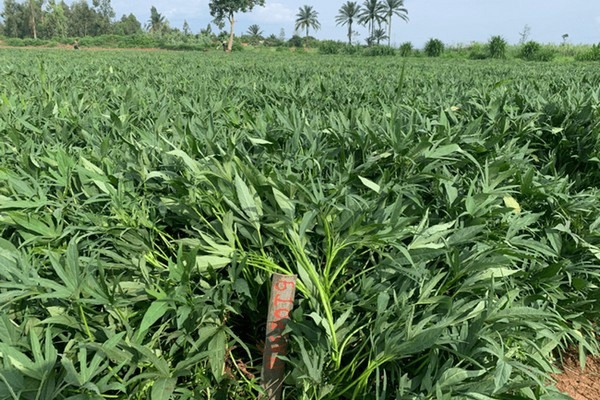
The crop has long been established in both provinces and covers large cultivated areas, but yields vary due to differences in farming practices and planting material. Traditional vine planting at the onset of rains remains common. Farmers grow a mix of local and improved varieties, including recent introductions of orange-fleshed sweetpotato, which are gaining adoption for their nutritional profile. Production is supported by rainfall patterns and warm conditions across much of the region.
 © CIP
© CIP
Orange-fleshed varieties are being promoted to address micronutrient deficiencies and to support food access during seasonal shortages. The introduction and distribution of these types in eastern DRC has been driven by organizations working on demonstration plots, vine multiplication, and training. According to Mr Elois CINYABUGUMA, Director of Research at INERA-Mulungu, "Sweetpotato remains the main crop for food security in Congolese households. They are used in nutrition to help reduce malnutrition. They have a significant impact on farmers' incomes because they are grown and harvested throughout the seasons in the Eastern DRC. Precisely, the crop is a source of life congruent to its local name 'cilera bana', which means protector or lullaby of children in the Mashi language."
Orange-fleshed sweetpotato (OFSP) is also being evaluated for processing potential. Its beta-carotene content aligns with efforts to address vitamin A deficiency, and its use in flour, puree, and chips allows integration into baked products and other processed foods. Demand in urban markets such as Bukavu and Goma is expanding, with processors testing its use in bread, mandazi, cakes, and cookies.
Seed system work and farmer training continue to influence adoption trends. The crop's early maturity and climate resilience support household food reserves, while urban demand is creating opportunities for value-added products. Partnerships among research institutes and farmer groups remain active in testing, distributing planting material, and strengthening agronomic practices.
Work in eastern DRC also reflects broader efforts to stabilise food supply in the Great Lakes region through sweetpotato improvement, nutrition-sensitive production, and support for smallholder growers.
 © CIPFor more information:
International Potato Center
Tel: +511 3496017
www.cipotato.org