The early Caffin variety is now finished, and it is time for Fine de Corse, the emblematic variety of Corsica. Here is an update from Agrucorse, which has decided to combine traditional know-how with innovation this year by integrating artificial intelligence to better anticipate the harvest.
Fine de Corse takes center stage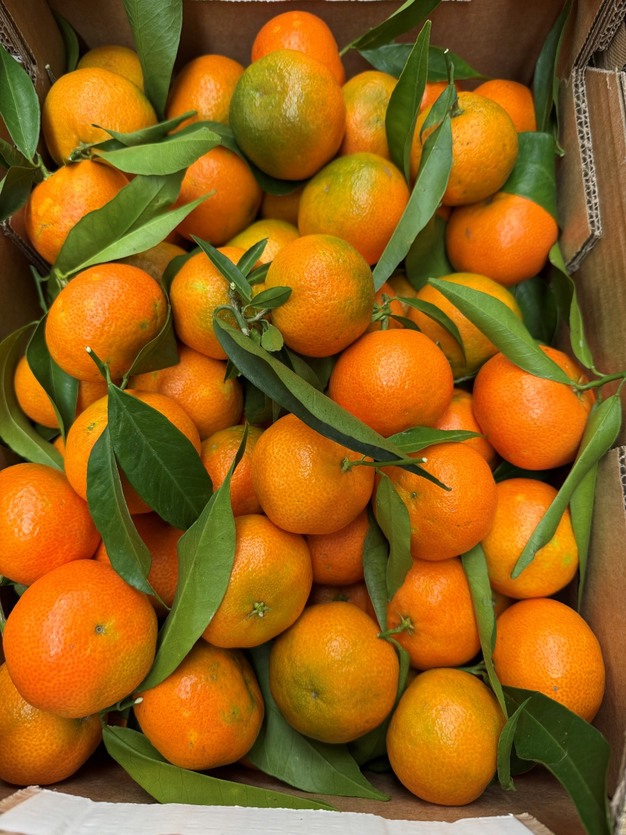 © Agrucorse
The star clementine variety of the season, Fine de Corse, is taking over from the Caffin on the shelves. This variety stands out for its juiciness (46%) and sugar content of 12°Brix. "Caffin is an early variety with a very bright orange color. In contrast, Fine de Corse, which also accounts for the majority of volumes, has a more intense green hue. This orange-green color sometimes intrigues consumers," explains Pierre-Marie Donati, a clementine grower. "Here, the nights are still a little too mild for all the chlorophyll to disappear, because the only way to get an orange skin is to have a wide temperature variation between day and night. The result is a partially green skin, but perfectly ripe orange flesh that is balanced, juicy, and generously sweet."
The campaign, which began almost a month ago, a few days earlier than last year, is going well so far. "Volumes should pick up this week. The campaign started well, and that should continue until the end, provided there are no weather incidents to disrupt the harvest," explains Cécile Donati.
"AI for finer, more sustainable and calmer crop management"
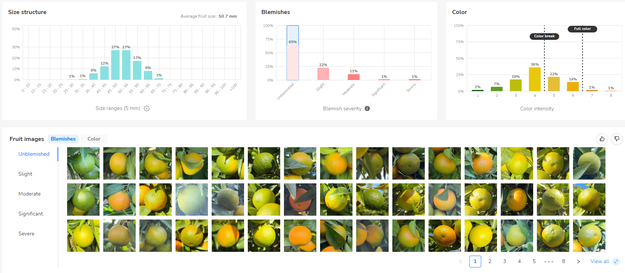
In 2025, Agrucorse turned to artificial intelligence to monitor fruit size and color in the orchards. "This is a first in Corsican citrus growing," according to the company. Usually, after the fruit has set, the clementines are measured to monitor their growth. "Thousands of fruits are measured throughout the year with a caliper in the orchards," explains a Terre d'Agrumes technician, "and just as many values have to be analyzed manually". It is tedious work, but essential in order to anticipate the volumes for each size. This year, however, the company has chosen to try out an application developed by the start-up Aerobotics, which uses simple photos taken in the orchards to analyze the size, coloring, and possible defects of thousands of clementines. From all this data, the tool draws a curve of fruit growth, week by week, which evolves until it predicts the size of the fruit at harvest time.
 © Agrucorse
This year is a test phase, but the initial results are promising. "For the time being, we are combining the two methods to get a sample and compare the results. Additionally, we are in the education phase with the AI, as we need to teach it how to identify significant defects," explains Cécile Donati. This saves a considerable amount of time, particularly for the technical team, which can then concentrate on other tasks.
 For more information:
Cécile Donati
Agrucorse
[email protected]
www.agrucorse.com