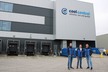
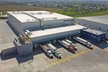
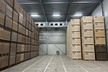
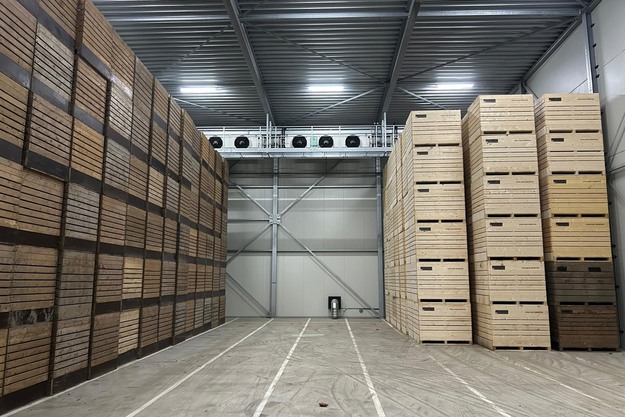
"The carrot and celeriac harvests are over, so we've begun using our new cold storage facility," says Aard Robaard. He and his wife, Greeke, own the Dutch company, Koelhuis Dronten. "With around 5,000 crates, it's now 60% full."
 © Koelhuis Dronten
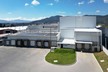
Aard explained that Koelhuis Dronten is a cooling complex comprising three cold storage facilities, two of which are dedicated entirely to storing fruit. In addition to owning this company, he grows fruit and is an arable farmer. "We have nine million kilograms of fruit in storage," says Aard.
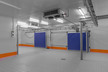
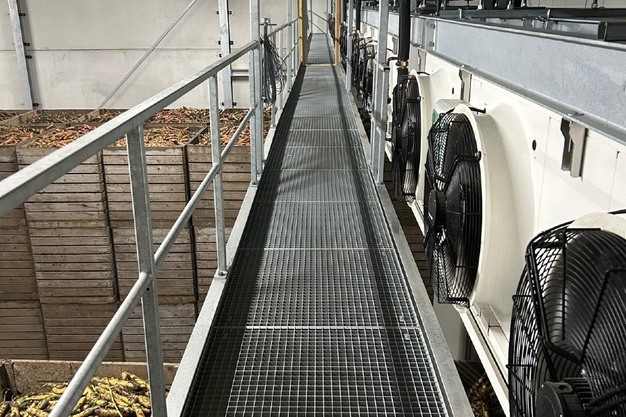
When they had to replace the third cooling facility's refrigeration system, the Robaards opted for greater flexibility. "Apples and pears are our main focus, but we sometimes also cool garlic, flowers, beetroot, or eggs. We're expanding our range and saw potential for storing carrots and celeriac. Hence, the new carrot and celeriac cold store, suitable for mechanically refrigerating those products."
 © Koelhuis Dronten
During construction, factors such as energy consumption were important to Aard. "Energy costs are a major factor. That's why the building is well insulated. We worked with Agricooling to find the optimal system," he says.
"For Koelhuis Dronten, it was essential that the new facility was completely state-of-the-art," says Stijn Huysmans, Agricooling's manager. This Dutch company also specializes in cooling and storage solutions for the agricultural sector. "An environmentally friendly refrigerant, an energy-efficient system, and reliability were some of the requirements they'd set. We compared systems, each with its advantages and disadvantages, price tag, and operating costs, to identify the best option."
CO2 cooling
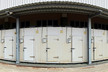
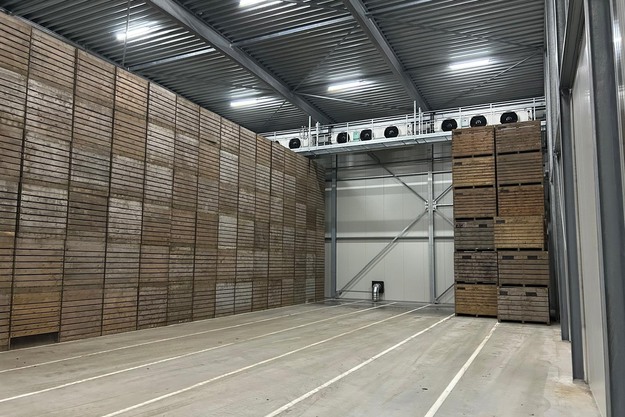
According to Stijn, eventually, the choice fell on direct cooling with CO2, a natural coolant. "The customized system refrigerates and stores around 8,000 tons of carrots, divided over ten cells. There are six large ones, two slightly smaller ones, and two even smaller. That layout provides flexibility," he explains.
 © Koelhuis Dronten
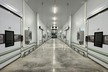
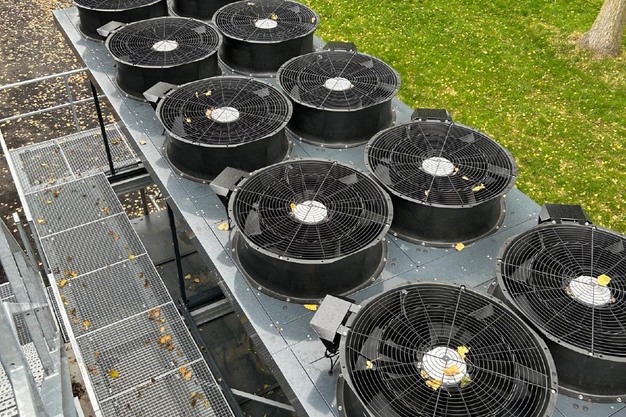
Energy efficiency was a critical focus during the design. "Besides the energy-saving investments required by the EIA, the evaporator fans, for example, have speed control (EC fans). That's because moving air costs money." Another example is defrosting the evaporators with pressurized gas heat, 'free' residual heat from the cooling installation. Agricooling also provided an injector system, allowing for working with a small Delta T.
 © Koelhuis Dronten
And that lower energy impacts operating costs. "These measures to work in an energy-efficient way obviously increase the up-front investment costs. But you reap the rewards throughout the system's whole lifespan. Along with the customer, we perform a cost-benefit analysis to see if it's worthwhile," Stijn concludes.
 For more information
Agri Cooling
Tel: +31 321 700 232
[email protected]
www.agricooling.nl
 Koelhuis Dronten
Tel: +31 321 315 588
[email protected]
www.koelhuisdronten.nl