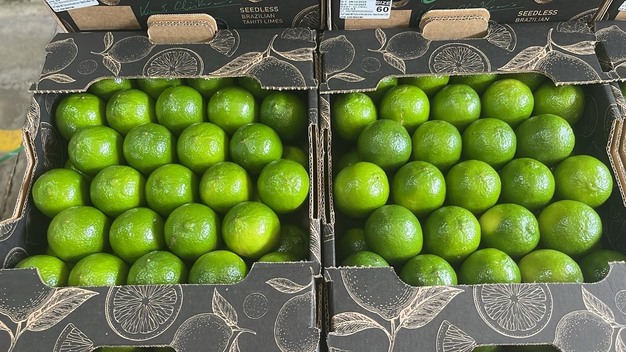
The Brazilian Tahiti lime market is adjusting with smaller sizes, lower prices, and decreased demand in Europe due to colder weather in the northern hemisphere.
Wellington Carvalho, Don Vicente's sales representative, states that recent rains in São Paulo are already benefiting the fruit's flowering and growth. "The rains have just begun, and we anticipate a steady rise in the available volume over the coming days," he said.
 © Don Vicente
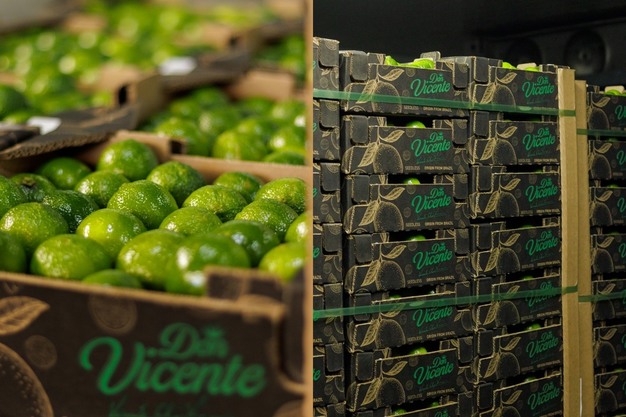
Europe remains the main market for Brazilian limes, with the Netherlands serving as a key logistics hub for distribution across the continent. However, Carvalho notes that "the European market has begun to slow in recent weeks. Prices stayed steady until mid-October, but as temperatures dropped and supply increased, demand started to decline."
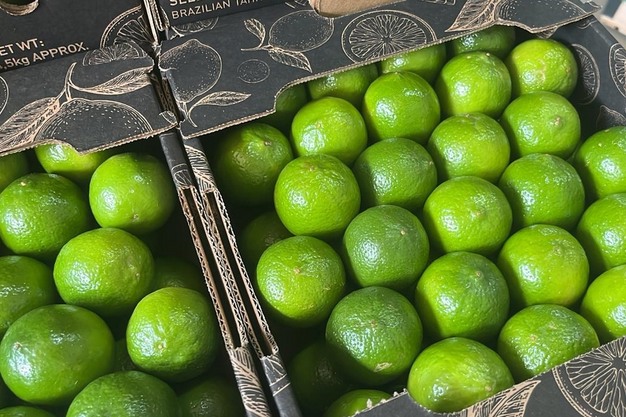
"Current prices range from $5 to $7 per box, depending on size and quality. Large sizes are the most sought after across Europe, while smaller sizes are mainly for the domestic market, which at certain times of the year is even more attractive," he observed.
 © Don Vicente
Unlike other citrus fruits, the Tahiti lime doesn't produce a single main crop. "Brazil has several production peaks throughout the year. We're starting a new harvest that will continue until mid-February, peaking in December and January. However, the weather will influence these outcomes," Carvalho said.
European consumption of Brazilian lime is closely linked to drinks and cocktails, so it depends on the weather. "Consumption increases significantly in summer when people go out more and temperatures are high," he explained.
"Brazil remains among the top five exporters of Tahiti lime worldwide, competing directly with countries like South Africa, Turkey, and Mexico. The latter still mainly supplies the US market. However, Brazil has strengthened its global standing by boosting productivity and expanding its destinations," he added.
 © Don Vicente
Brazil seeks to expand its presence in Asia by negotiating agreements to access markets in India and China. The main challenge is logistics. "Currently, maritime transit to Asia can take over 40 days. Although the fruit has a decent shelf life, ideally, the transit time should be reduced to about 15 or 20 days to maintain maximum freshness," Carvalho stated.
"We are committed to the sustainable growth of the Brazilian Tahiti lime, building trust with our trading partners and opening new opportunities for the country," he concluded.
 For more information:
Wellington Carvalho
Don Vicente
Brazil
Tel.: +55 17 99732 1110
[email protected]
www.frut asdonvicente.com.br