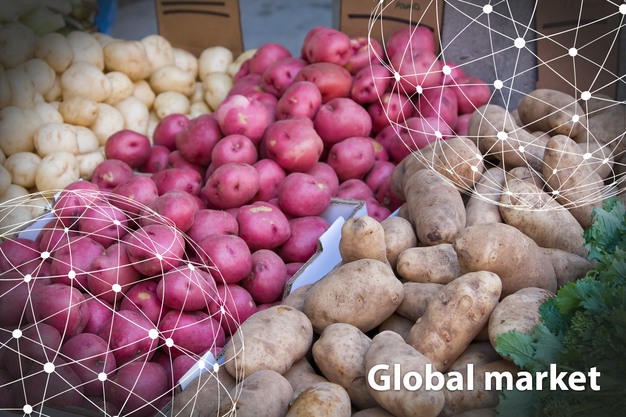
European and global potato markets remain under pressure as production, weather, and pricing trends diverge sharply across regions. In Italy, prices have fallen due to increased French supply, while the Netherlands continues to face weak demand and factory slowdowns. France reports exceptional production but a deep market imbalance, and Poland's higher yields have led to price drops. Switzerland and Austria are experiencing abundant supply and stable demand, though with storage and logistics constraints. Germany faces rising quality issues alongside ongoing price pressure. In Spain, a larger planted area and delayed harvest have increased overall production, resulting in lower prices and weaker exports.
 © Viola van den Hoven-Katsman | FreshPlaza.com
Outside Europe, New Zealand growers report mixed planting conditions following a variable spring, while Australia continues to grapple with fresh potato shortages after a dry autumn. In North America, yields are solid but prices remain low. South African farmers face heavy losses as oversupply drags prices below production costs. Egypt expects a more dynamic season with improved seed quality and strong planting conditions, while Pakistan reports record production and rising export volumes to key regional markets.
Italy: Prices ease as French supply pressures the market
A major potato producer and trader in northern Italy says that "there seems to be too much product in northern Europe. We are going through a period of reflection." The Italian market remains stable and calm. Prices had been inflated in recent months but have now fallen under pressure from French produce. Producers in Italy are currently receiving around €0.25–€0.30 per kilogram.
Demand from large-scale retailers is not yet very high, but orders are expected to increase from November. There are no major shocks, and the market is fairly stable. Italy continues to import potatoes because it does not produce enough to meet domestic demand, meaning the Italian market is influenced by the wider European situation. POD and PGI-branded potatoes perform better, as they are easily recognisable to consumers and enjoy greater demand. The free market remains stable, with perhaps a slightly higher supply than sales, which is typical for this time of year.
According to YouGov data, almost 90% of Italian households purchase potatoes. They are bought both by weight and in traditional fixed-weight bags, with little difference between the two options due to significant overlap. Organic potatoes are particularly notable in this context, with more than 25% of households buying them, an uncommon figure in the fruit and vegetable sector. This share has been increasing over the past three years. The frequency of purchase remains constant at around 11 times per year, as does the average spend per purchase at around €2.60. However, the quantity per purchase has declined from almost 2 kilograms in the year ending August 2023 to just under 1.8 kilograms in the most recent period.
Netherlands: Little movement in the potato market
The potato market is going through a difficult period. "For the time being, there's hardly any movement in prices. The biggest issue, in my opinion, is the planned production stops and reduced activity at the factories. This is holding back demand, and it should actually be the processing industry sending the signal that the market is ready to move upward again, but that hasn't happened yet," says a Dutch potato trader. "Of course, there are too many potatoes on the market, but the main problems now stem from geopolitical tensions and the fact that French fry sales across Europe are slower than expected. That certainly doesn't make things any easier."
Still, another trader remains optimistic. "Yes, there are plenty of potatoes in the EU, and the fry market and processing aren't performing as they should, but we also know that factories aren't buying cheap potatoes at all. Everyone keeps saying fries are cheap, but that's simply not true; everyone is living under expensive contracts. I still hold on to a saying my old business partners once taught me: 'Cheap potatoes sell out in no time; expensive ones are always around.'"
Belgium: Potato harvest nearly complete with high yield, but market under pressure
The majority of Belgium's potato harvest is now complete, with approximately 90 percent of the potatoes already dug up. Overall, yields are reported to be good and quality is generally high, although the hot and dry summer has led to some variation in size and dry matter content in certain areas, particularly among firm-cooking varieties. Total volume is higher than last year, but the large supply is putting pressure on an already difficult market, especially as not all growers have storage capacity and some batches must be sold immediately.
Demand on the export market exists but is limited, partly due to competing stocks in Southern Europe and Poland. This is resulting in low prices and wide price variations, depending on quality and packaging. High-quality, wash-ready potatoes for retail are in demand and can fetch up to 20 cents per kilo, whereas standard, unwashed batches typically remain around 10 cents per kilo.
France: 2025 potato campaign faces major market imbalance
The 2025 campaign is at a turning point. France is recording an exceptional production of around 8.5 million tons of ware potatoes, driven by a 10% increase in acreage compared to 2024, reaching 197,000 hectares, and by high yields. However, this "rush" towards potatoes, encouraged by expectations of strong industrial demand for fries and chips, has created a significant short-term imbalance between supply and demand.
As a result, the market is now clearly segmented. Firm contracts are still maintaining reasonable prices, with contracted deliveries around €180 per ton, but the open market is collapsing; some non-contracted lots are trading at very low levels, around €5–15 per ton depending on the case, well below the estimated cost price for producers of approximately €150 per ton. This sharp contrast explains the financial distress of some farms, particularly those focused on industrial supply.
Official RNM quotations show relative stability in consumer prices in certain segments (table, organic, and quality potatoes), while the industrial segment remains under heavy pressure, with few purchases taking place. The presence of residual stocks from 2024 is further worsening the situation.
Poland: Output up 15% as acreage and yields increase
Potato production in Poland is expected to reach 6.8 million tons this year, 15% more than last season. This increase results from both expanded cultivation areas and higher yields per hectare, supported by favourable prices in recent years. Some sector representatives dispute this forecast, suggesting production could exceed 7.5 million tons depending on the final progress of the harvests. According to official data, the average yield is 31.8 tons per hectare, 5% higher than in 2024, when it stood at 30.2 tons per hectare. Despite a dry spring, subsequent rainfall helped restore tuber potential.
Demand was slightly lower during the summer months, mainly due to the high availability of locally grown potatoes across the country. However, in recent weeks, a Polish exporter has noticed a modest increase in demand, which he describes as a promising sign heading into the autumn season.
Prices have been much lower this season due to record-high production levels. Alternative crops such as wheat have not been particularly attractive this year, encouraging many growers to plant more potatoes. As a result, there is frustration among growers, as free-buy prices have dropped to extremely low levels. Clients are increasingly expecting mono-material, fully recyclable packaging, reflecting a growing awareness and demand for sustainable solutions.
Switzerland: 20% higher potato yield than last year
In 2025, Swiss farms will harvest more potatoes than they have in years, specifically, 20% more than in 2024 and 17% more than the long-term average. This increase also brings some negative consequences for farmers: prices are falling slightly, quality standards are being enforced more strictly, and storage capacity has become scarce in the short term.
Due to the bumper harvest, there was an unexpected shortage of crates for loading the potatoes during harvest. Across Europe, the wooden containers known as "paloxes" have become a scarce commodity. "Carrots and onions are stored in the same containers and had to be harvested at the same time, so some producers had to delay their potato harvests because they had run out of pallet boxes," according to the industry association Swisspatat.
Austria: Abundant supply with stable market conditions
The domestic table potato harvest in Austria is not yet fully completed. The main reason for the delay is the limited availability of empty crates. However, the remaining fields to be harvested are now quite manageable, and the last potatoes are expected to be collected next week.
The market situation has remained unchanged for several weeks. There is an abundant supply and steady demand in the domestic food retail sector. In contrast, export opportunities remain limited due to strong price competition from other European producers.
According to LKÖ, producer prices have also shown no movement. In Lower Austria, up to €20 per 100 kilograms is being paid for good-quality produce, with deductions still applied for interim storage and higher logistics costs. In Upper Austria, the price level remains stable at €15 to €20 per 100 kilograms.
Germany: Increasing quality issues and continued price pressure
Following the completion of storage, packing companies and retailers continue to source fresh potatoes directly from the field this week. In several growing regions, there are increasing signs of declining quality in field-harvested potatoes. In particular, worm damage and black spot have been occurring more frequently.
At the same time, price pressure persists across the entire market, with low-priced goods from neighbouring surplus regions flooding an already saturated market. Even export shipments are proving barely profitable under current conditions.
Spain: Larger acreage pushes prices down amid delayed harvest
The potato harvest in northern Spain is in its final stages, around 15 days later than usual due to adverse weather. In Castilla y León, the country's main potato-growing region, the planted area increased by more than 12%, reaching almost 20,000 hectares. Although yields have not been high this year, the expansion in acreage has led to higher total production, pushing prices down compared to previous seasons.
This comes at a time of generally low fresh potato consumption across Europe, where record production has been reported. The oversupply in many European countries has caused a sharp decline in Spanish exports this season. Price conditions have been especially difficult for growers who expanded production without contracts or supply programs with traders or distributors.
New Zealand: Early weather challenges delay planting in some regions
Planting conditions have been mixed this year across New Zealand's main potato-growing regions. Some areas experienced wet and cool soil conditions, slowing early planting progress, while others benefited from more settled weather that allowed for good crop establishment. Growers have been working within short weather windows to complete planting, with some affected by late frosts and adverse weather in the South.
A slightly later start in some regions may delay the harvest by one to two weeks. However, with favourable weather through November and December, crops could recover quickly. Volumes and sizing will depend on summer weather conditions.
The first new potatoes, mainly from Northland, Pukekohe, and Waikato, are typically harvested from late October through November to supply early summer and festive season demand. The main harvest usually runs from February through May, depending on the region and crop purpose: Fresh, processing, or seed. Despite early weather challenges, crop establishment is good, and growers are optimistic for a solid season if summer temperatures remain stable with moderate rainfall.
Domestic demand remains steady throughout the year, supported by consumer preference for locally grown produce. Key export destinations include Fiji, French Polynesia, New Caledonia, Samoa, and other Pacific Island nations, as well as Southeast Asia and Australia for processed potato products. Export volumes fluctuate annually according to domestic supply and regional demand.
Australia: Dry autumn causes fresh potato shortage
Australia has experienced an extremely dry autumn and a delayed start to winter, with temperatures around three degrees higher than normal. The unusual conditions have led to a shortage of potatoes across the country. Warmer weather affected tuber initiation, reducing the number of tubers per plant. These potatoes have been stored in the ground for several months, and until the early harvest of the spring crop begins, quality and volume are not expected to improve. A normal supply season is unlikely before December.
South Australia, the country's largest producer of fresh table potatoes, has been the most affected. The Gatton region in Queensland is currently supplying good-quality potatoes at fair prices to growers.
The shortage affects only fresh table potatoes and is concentrated in the eastern states, including South Australia, Victoria, New South Wales, and Queensland. Supermarkets have adjusted their supply specifications to accommodate the shortfall and ensure continued availability.
Strict biosecurity rules prevent the import of fresh potatoes into Australia, contributing to the shortage, although the country continues to import large volumes of frozen fries.
North America: Good yields reported across major growing regions
Even with a slight decrease in planted and harvested potato acreage in the U.S. in 2025, yields in key growing regions such as Idaho remain good, with a favourable size profile. The harvest of fresh potatoes in regions such as central Minnesota has finished with yields above 2024 levels, while Prince Edward Island is concluding its harvest with an average to below-average crop. Other regions, including Ontario, are reporting yields higher than last year's but still below the five-year average.
Potato demand is steady and consistent. While last year there was little gap between the storage crop and the new crop, leading to overlap, this year the transition has been smoother. Demand for yellow potatoes continues to grow; this segment has more than doubled over the past eight years, increasing in value from approximately €268 million to €564 million.
Potato prices remain relatively low, as limited gaps between the old and new crops make it difficult to build pricing momentum for the new season. However, this situation offers promotional opportunities for retailers.
South Africa: Surge in volumes pushes prices below production cost
Farmers currently lifting potatoes in Limpopo Province and the Sandveld, Western Cape, are incurring losses of many tens of thousands of euros on the harvesting and transport of their crop to processors, municipal wholesale markets, and retailers. An additional 2,000 hectares of potatoes were planted in March and April as a safeguard against risks such as the black frost of July 2024, which wiped out entire fields.
However, the mild winter did not reduce yields as expected, resulting in a large potato crop and a surge in volumes anticipated at markets over the coming month. The size of the crop only became evident at the end of July when the Limpopo potato season began. "It's a very difficult potato season this year," says a retailer. "Over the last two months, there has not been a single potato in South Africa selling at higher than production cost."
Many more potatoes need to be sold to match the turnover of 2023 or 2024, when prices were high. Potatoes last traded at current price levels in 2022. Last year's year-to-date prices were more than double the current figures. Market sales volumes are higher than during the past two years, yet turnover remains lower, a situation some describe as deflation.
According to Potatoes SA, wholesale market sales of Limpopo-grown potatoes (10 kg bags) rose 31% over the first 43 weeks of the year compared to last year, with 3.2 million more 10 kg bags sold than the region's five-year average.
"It's not great to be moving all of these kilograms and not to be turning over a dime," a farmer says, noting that transport is the largest cost in the supply chain. Potato yield is only now increasing; those grown over winter have lower yields, further complicating returns at current low prices.
At the Johannesburg municipal market, potatoes sold for an average of less than €0.20 per kilogram last week. The current wholesale price of a 10 kg bag ranges between €2.40 and €2.70, and just under €2.00 for a 7 kg bag. A market analyst expects a surge in supply over the coming month, which could prevent prices from recovering beyond €2.00 per 10 kg.
Quality issues may begin to emerge as summer temperatures rise, with sustained low prices likely to persist into November. The only beneficiary of the current situation, a retailer notes, is the consumer.
Pakistan: Exports rise in line with record potato production
Pakistan's potato production reached approximately 9 to 9.5 million tons in the 2024–25 season, representing a 20% increase compared to the previous period. Exports have grown in parallel with production, with key destinations including Afghanistan, Sri Lanka, the UAE, Gulf countries, and Central Asian states.
Fresh and chilled potatoes dominate exports, featuring varieties such as Mozika, Santa, and Ismi, with varying grading and packaging standards. The frozen and processed segments remain smaller but are expanding, with buyers favouring processing varieties like Lady Rosetta, Hermes, and Asterix, known for their high dry matter and low sugar content.
Export prices currently average between €170 and €180 per ton. Despite ongoing challenges such as seed quality, post-harvest handling, and freight costs, initiatives in certified seed programs and improved packing facilities aim to strengthen the export sector. The outlook points to a steady balance between supply and demand in the coming weeks.
Next Topic: Pineapples