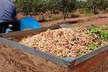
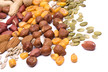
Kenyan macadamia growers are calling on the government to ease the export ban on unprocessed nuts, citing low farmgate prices and unsold stock across producing regions. They propose allowing up to 30 percent of annual production to be exported to Chinese firms.
Kenya produces around 61,000 metric tonnes of macadamias annually, valued at about US$30 million (Sh4.5 billion). According to Macadamia Growers of Kenya's official Muriithi Gichabi, the current restrictions have left processors unable to handle available volumes, depressing prices, and affecting agents' operations.
"The processors are holding millions of shillings from the agents, affecting their businesses. If the situation is not handled next year, it will be worse," said Gichabi, who farms in Kiamutugu village, Kirinyaga.
He criticised the Agriculture and Food Authority (AFA) for not ensuring compliance with regulations across the value chain. "There is only one factory that has a list of the farmers, as imposed by the regulator," he said.
Nut Traders Association of Kenya chairman Johnson Kihara said traders have suffered losses following the sudden ban on in-shell exports. "The dealers are pleading with the Agriculture CS Mutahi Kagwe to suspend the regulations to enable the agents to export the nuts," said Kihara.
Kirinyaga Senator Kamau Murango added that other producing countries, such as Zimbabwe and Australia, have export formulas for in-shell and processed nuts. "Kenya should follow suit to ensure there is fairness," he said.
Growers in central Kenya report lower payments this season. Magdalene Mwangi, a farmer from Ndia, said macadamia prices have dropped to between Sh40 and Sh70 (US$0.26–0.45) per kilogram, compared with Sh100 to Sh140 (US$0.65–0.91) last year. "The farmers want the government to come up with the formulae that will salvage the macadamia industry through allowing the export of in-shell nuts to the Chinese market," she said.
AFA Director General Dr Bruno Linyiru maintained that the ban on raw macadamia exports remains in force, saying it has reduced theft and premature harvesting. He said local processing allows the shells to be converted into charcoal and organic fertiliser.
"The export of nuts to the Chinese undermines Kenya's market share in Europe, among other destinations," Linyiru said. He added that monitoring reports have revealed malpractice in the sector, including unauthorised trading and harvesting of immature nuts, which had compromised the integrity of the supply chain.
Source: The Standard