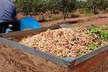
The Spanish province of Huesca is not a typical pistachio-growing area, but its climatic conditions, the abundant, top-quality water from the Pyrenees, the Monegros desert, and the Cierzo wind all contribute to making it an ideal location for this desert fruit.
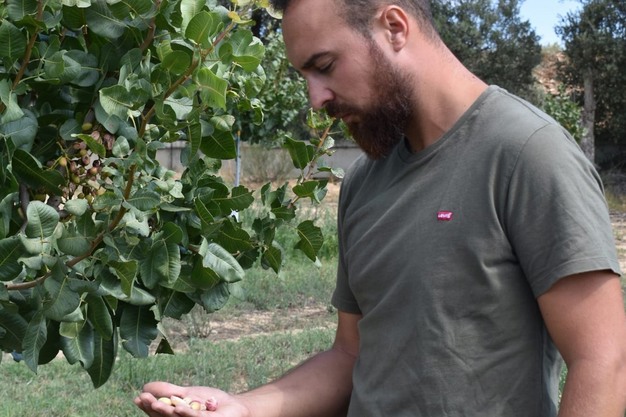
"It's been eight years since we started growing pistachios on our farms. In the Ebro Valley, we have water allocations of between 6,000 and 9,000 m³ per hectare. The Cierzo helps with pollination; moreover, the environment is very dry, which makes it harder for diseases to spread. We grow it in the Somontano, Monegros, Hoya de Huesca, and surrounding areas. These are areas with very cold winters, very hot summers, and low relative humidity. We believe that Huesca has optimum conditions for pistachio cultivation," says José Ignacio Duerto, manager of Pistachos del Norte.
 © Pistachos del Norte
"We founded the Pistachos del Norte processing plant because we are a long way from the others. Once harvested, pistachios must be processed within 24 hours, or else they deteriorate. Black spots start appearing on the shell, and toxins are also generated. To avoid having to move our crops to the south, we decided to set up our own processing plant here," says Duerto.
"Olive trees, almond trees, and vines have always been planted here, but we were looking for alternatives that would serve as a complement. It is true that it is very difficult to get into pistachio production, as it takes a long time for it to become profitable, and you will actually never achieve that without a good plantation design."
 © Pistachos del Norte
Another advantage is that "pistachio trees bloom between April 15 and 25, which reduces the risk of frost. Moreover, it is not as threatened by pests and diseases because of its more limited presence, as well as its hardiness."
As far as profitability is concerned, the manager says that "in Huesca, a pistachio tree takes 6 or 7 years to become productive when not irrigated, and about 4 or 5 years when irrigated. And this doesn't mean that it will already be profitable, since only after 10 or 12 years will it achieve its peak in terms of productivity."
As far as costs are concerned, "pistachio cultivation is completely mechanized. Labor is only needed for pruning," says Duerto, adding that "all the machinery used with almond trees is also suitable for pistachios, and the harvesting periods follow each other. Pistachios are harvested from September 15 to October 10, right in between almonds and olives, so the same harvester, crew, etc. can be used."
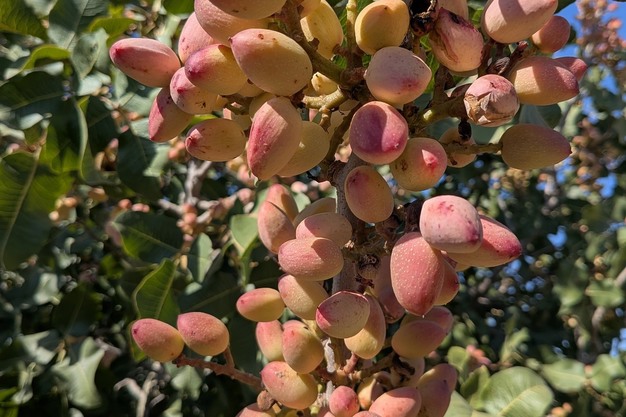 © Pistachos del Norte
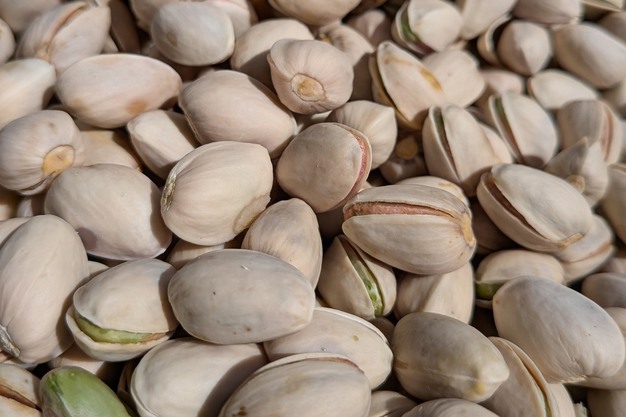
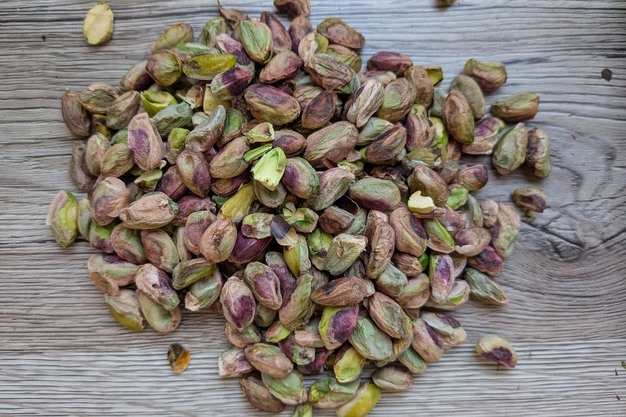
At the moment, according to Duerto, they are producing "between 600 and 800 kg per hectare in rainfed cultivation and between 1,500 kg and 2,000 kg from irrigated crops. We sell everything in Spain and the rest of Europe. We are devoted to producing and drying the product. We sell open, calibrated, and dried pistachios. Others are in charge of roasting and salting it. We do a little retail work, but that's not a big part of our activity."
As far as Iranian pistachios are concerned, "our product is much healthier and, moreover, theirs tend to be small and elongated, while ours is bigger and more open."
As far as the U.S. pistachio is concerned, Duerto says: "It is our great rival. Spain doesn't account for even 1% of the world's production, but the U.S. delivers large volumes and has a great deal of experience."
 © Pistachos del Norte
"A conscientious consumer would usually prefer products traveling the shortest possible distance. Our pistachios are more sustainable and efficient because they are produced and sold on our continent. We can be very competitive, but there is still a lot of work to be done," says the manager.
"There is a trend in consumption that we are seeing in the industry. There are more derivatives, and I believe that, in the next few years, pistachio and almost consumption could end up on a par," says the manager.
For more information:
José Ignacio Duerto
Pistachos del Norte
Tel.: +34 697 27 84 44
[email protected]
https://pistachosdelnorte.es/