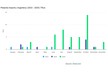
Türkiye earned about US$1.61 billion from hazelnut exports between January and September 2025, according to data from the Black Sea Hazelnut and Products Exporters Association (KFMIB). A total of 188,731 tons of hazelnuts were exported during this period, showing a decline in both export volume and revenue compared to the same months of 2024.
In the January–September 2024 period, Türkiye exported 213,073 tons of hazelnuts, generating US$1.73 billion. The year-on-year decrease reflects ongoing challenges for exporters linked to market fluctuations, price instability, and shifting demand from key importers, including Italy, Germany, and France.
Türkiye remains the world's largest producer and exporter of hazelnuts, supplying around 70% of global demand. The Black Sea region, particularly Ordu, Giresun, and Trabzon, continues to be the main production area, supporting thousands of farmers and contributing substantially to the country's agricultural economy.
Exporters emphasized the need to strengthen value-added production, diversify export markets, and improve branding to maintain competitiveness in international markets. The association also highlighted that sustainability and quality certification are essential to ensure Turkish hazelnuts continue to meet global standards.
Despite lower export figures, sector representatives expressed cautious optimism for the final quarter of the year, citing stable yields and improving weather conditions. They also pointed to possible new trade agreements that could open opportunities in emerging markets in Asia and the Middle East.
According to KFMIB, Türkiye's long-term competitiveness in the hazelnut trade will depend on adapting to global demand shifts while ensuring sustainable production and consistent quality.
Source: Ilkha