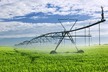
A new survey by ConectarAgro shows that 28.26% of Brazil's areas irrigated by central pivots have 4G or 5G internet access. The mapping highlights a gap between agricultural mechanization and digital infrastructure in rural regions.
Of the mapped equipment, 13.55% is fully connected. Brazil has 2.2 million hectares irrigated by central pivots, according to Embrapa, an increase of almost 300,000 hectares compared with 2022. The extreme west of Bahia remains the country's largest irrigation hub. Minas Gerais, Bahia, and Goiás are the leading states in irrigated area, while São Desidério in Bahia holds the largest municipal area, followed by Paracatu and Unaí in Minas Gerais. More than 70% of irrigation is located in the Cerrado biome, while the Pantanal has no use of this technology.
"The numbers show that, even in highly technologically advanced regions, the lack of connectivity remains a bottleneck. Without internet, we can't harness the full potential of modern irrigation to make water use more efficient, reduce costs, and increase production sustainability," said Paola Campiello, president of ConectarAgro.
In Minas Gerais, the survey found 559,600 hectares irrigated, of which 26.5% are connected. Paracatu and Unaí, despite being among the largest irrigated municipalities in the country, show low connectivity rates of 1.5% and 10.4%.
São Paulo has 247,000 hectares of irrigated land, with 53.4% connected, a level described by ConectarAgro as satisfactory.
Other states with smaller irrigated areas but higher connectivity include Ceará and Paraíba, with 72% and 77% of irrigated hectares connected, respectively.
For Campiello, connectivity is a fundamental resource for agricultural production. "Rural connectivity is key to enabling precision agriculture, increasing water efficiency, ensuring traceability, and opening up new opportunities for social and economic development," she said.
Source: Abrafrutas