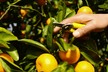
Punjab Minister for Agriculture & Livestock, Syed Ashiq Hussain Kirmani, led the third meeting of the Chief Minister Punjab Citrus Development Task Force to assess strategies aimed at citrus enhancement under Chief Minister Maryam Nawaz Sharif's administration.
The congregation included Vice Convener Mohsin Shahnawaz Ranjha, Secretary Agriculture Punjab Iftikhar Ali Sahoo, and key stakeholders. Minister Kirmani highlighted the challenges impacting kinnow, Punjab's hallmark citrus, noting issues like climate change and declining fruit quality affecting both yield and export levels. The government has activated a Rs. 1.2 billion Citrus Revival Programme as part of the Chief Minister's Kisan Package to tackle these issues.
The programme proposes certified nurseries, adoption of agri-tech, export enlargement, and technical support to cultivators. It introduces Citrus Park, integrates citrus with the Kisan Card system, and recruits 100 interns and 100 professionals annually over three years. A legal framework will oversee private nurseries in conjunction with diagnostic labs, while the Bank of Punjab's Rs. 30 million (US$360,000) nursery loan scheme provides financial support to agribusiness.
A robust value chain, third-party audits, and institutional performance monitoring are deemed necessary. Another proposal includes the establishment of model citrus farms on 20 hectares each in Sargodha and Toba Tek Singh, along with a mobile app for nursery registration and oversight.
Strengthening the Citrus Research Institute in Sargodha is pivotal, as is increasing research capabilities for seed variety and technique enhancement. The forthcoming Punjab Fruit and Vegetable Board will oversee strategic planning across 325 hectares in chosen districts for citrus, olives, mangoes, and vegetables.
Secretary Iftikhar Ali Sahoo mentioned affordable, high-quality citrus plants, facilitated by public-private collaborations in Layyah, Pattoki, and beyond. Vice Convener Mohsin Shahnawaz Ranjha emphasized the decrease in Pakistan's citrus exports from USD 200 million to US$130 million, underscoring the importance of varietal improvement and farmer support.
Source: APP