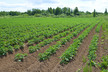
Kyrgyzstan is approaching full self-sufficiency in several essential food categories, particularly vegetables, potatoes, and select fruits. These products form the backbone of the country's agriculture and are consistently produced in volumes that exceed domestic demand.
Vegetables and potatoes: Stable oversupply
Thanks to favorable climate and soil, Kyrgyz farmers grow large quantities of potatoes, carrots, onions, and cabbage. In recent years, production has remained well above national consumption. In 2022, domestic output covered 96% of vegetable needs and 94% of potato demand. In some years, potato harvests have more than doubled what is required.
Fruits and berries: Seasonal strength
Local fruits such as apples, apricots, grapes, and walnuts also contribute significantly to the food supply. In a good harvest year, Kyrgyzstan produces up to 89% of the fruit and berries consumed nationally. However, full coverage across all types is not possible; tropical fruits like bananas and citrus are fully imported. Still, for seasonal domestic varieties, the country maintains a high degree of self-reliance.
Sector weaknesses
Despite strong production, the agricultural sector faces vulnerabilities: Aging machinery, dependence on imported seeds and fertilizers, limited storage and processing capacity, and outdated irrigation systems. These issues impact efficiency and reduce long-term resilience, but do not currently prevent Kyrgyzstan from meeting its core fresh food needs.
Source: kaktus.media