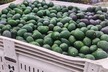
The Tanzania Horticultural Association (TAHA) has introduced five avocado collection points in the Njombe Region. This initiative, supported by the Swedish International Development Cooperation Agency (SIDA), aligns with TAHA's 20th anniversary and aims to modernize the horticulture sector. Additional backing comes from TradeMark Africa (TMA) and the Alliance for a Green Revolution in Africa (AGRA), directly impacting over 2,000 smallholder farmers.
Regional Commissioner Anthony Mtaka highlighted the collection points' role in streamlining avocado aggregation, minimizing post-harvest losses, and enhancing export efficiency. Each site is expected to manage between 20 to 50 metric tons of avocados, facilitating quality assurance and direct access to international markets. He emphasized the importance of public-private partnerships to maintain these investments and the need for Tanzania to meet global standards and competitively price its products.
Avocado exports in Tanzania have increased by 33 per cent in 2023/24, reaching 35,627 tonnes and generating 252.3 billion Tanzanian shillings, more than doubling the revenue from two years ago. TAHA CEO Dr. Jacqueline Mkindi noted that the initiative extends beyond infrastructure, incorporating farmer training, financial literacy, gender inclusion, and nutrition to enhance livelihoods. "It's about lifting millions into prosperity," she stated, acknowledging the support from SIDA, AGRA, and TMA.
TAHA anticipates that current trends will enable the country to exceed its 2030 avocado production target of 250,000 metric tons. Expanded market access includes China, India, South Africa, and the United Arab Emirates, facilitated by trade events such as Fruit Logistica in Berlin.
Dr. Hussein Mohamed Omar, the Agriculture Deputy Permanent Secretary, commended TAHA's alignment with national objectives under "Agenda 10/30," which targets 10 per cent annual agricultural growth. The collection points are part of broader sector investments, including four avocado processing plants established through public-private partnerships to enhance value addition.
TAHA subsidiaries, such as TahaFresh and Greencert, are instrumental in logistics and international certifications. Over 6,000 farmers have achieved global good agricultural practices (GAP) and similar certifications, unlocking premium export markets. In Njombe, Greencert assisted an avocado company and 700 farmers in obtaining certification, boosting quality assurance and export readiness.
Farmers like Erasto Ngole from Itulike village view the collection points as a source of stability and growth, providing a reliable market and improved prices. "These centers are a game-changer," he remarked.
Since its inception in 2004, when horticultural exports were valued at $100 million, TAHA has grown to represent over 6.5 million farmers, increasing exports to $569 million annually, with a peak of $780 million before the pandemic. Through partnerships and advocacy, TAHA has fostered a robust commercial agriculture ecosystem, transforming Tanzania's horticulture sector.
Source: IPP Media