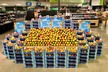
Twice a week, Malia Stewart navigates the competitive environment outside the Līhuʻe Costco, vying with smoothie shop owners and roadside entrepreneurs for crates of pineapple. The rapid sellout of this tropical fruit is a common occurrence, with Stewart describing it as "pineapple wars". Stewart, involved in Uncle Mikey's Dried Fruit, finds herself in a challenging position due to the reduced output from Dole Food Company Hawaii, the state's leading pineapple producer. This reduction follows Dole's strategic decision to decrease its operational scale and phase out its export business.
The Pineapple Store owner, Christian Marston, expressed, "We're The Pineapple Store, and we don't have any pineapples. It's embarrassing." Pineapple remains a staple both for tourism and local consumption, integral to products and experiences ranging from Mai Tais to lūʻaus. The Pineapple Store, known for its pineapple-themed merchandise and fresh fruit shipments, has faced disruptions due to supply constraints, leading to order refunds.
Dole Hawaii General Manager Dan Nellis noted that while there is no overall shortage, the distribution of large-sized fruit preferred by wholesalers is inconsistent. "We really spoiled the local market in the old days because we grew way more fruit than we needed, and we could say, 'Don't send any of the big fruit to the mainland,'" Nellis stated.
Earl Kashiwagi of Esaki's Produce imports approximately 2,000 cases of Dole pineapple weekly, with half allocated to Costco. However, recent months have seen a struggle to fulfill orders, impacting various retailers and businesses. "We can't tell a big hotel that we ain't got pineapple. On Kauaʻi, that's like saying we don't have drinking water," Kashiwagi remarked.
Despite the challenges, Dole Hawaii continues to harvest weekly, employing plant hormones for year-round production, a practice not followed by smaller growers who focus on seasonal yields. The competitive landscape is further influenced by Central American producers, who dominate mainland markets with lower production costs.
Local grower Patrick Abbott has faced requests to develop off-season crops but has found the results unsatisfactory due to altered flavor profiles. Meanwhile, pricing disparities remain, with high-end purchases such as a $48 sugarloaf pineapple highlighting the complexities of the market.
Source: Civil Beat