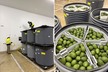
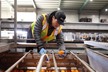
In May of this year, an apple leather was unveiled by Sorena, a fashion accessories company from Shinshu, an upland region that roughly matches the boundaries of Nagano Prefecture. Yuri Ito, president of Sorena, describes the production of apple leather.
Of course, leather and fur have taken a hiding in recent years. Animal welfare is no longer the realm of activists but is affecting mainstream consumer choices, as are environmental concerns. In 2017 fashion house Guccio Gucci, S.p.A. announced that it would cease using fur. The move was mirrored across the fashion industry, as designers said they, too, would halt the use of leather and fur.
Therefore, there is a market for faux leather--a synthetic fabric with similar appearance and properties. But it is made from petroleum-derived materials such as polyurethane.
Mushroom leather
Mycl Japan Co. of Komoro city in the same prefecture is developing a leather using mushroom material. Nagano Prefecture is the nation’s largest producer of mushrooms. “The mushroom leather we produce is made from 100 percent natural materials,” said Keita Inui, Mycl Japan’s president. The leather is made from mycelium, a fluffy tissue that spreads from the base of mushrooms as they grow.
Source: asahi.com