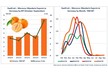
Today is the ninth anniversary of the Economic Agreement between the European Union and Southern Africa (South Africa). According to La Unió Llauradora, the occasion coincides with a rise in the volume of citrus from South Africa entering European markets tariff-free, especially at the beginning of the Spanish season.
The reduction stipulated in the Agreement indicated that each year, between 16 October and 30 November, the tariff was gradually decreased until it became effectively negligible or zero starting from 2025. It is precisely during these dates, which correspond with the start of the harvesting season in the Valencia Region, that the market share of South African citrus fruits within the European Union experiences its most significant increase, according to La Unió.
 © La Unió Llauradora
A study by the organization notes that "in this critical time window, which overlaps with the start of our mandarins, it has increased by 11.5% over the nine years since the agreement began. In October, it increased by nearly 24%, breaking last year's entry records with almost 145,000 tons. November, though less dominant than October, has gained prominence in recent years, extending the pressure on the first Valencian citrus harvest. 66% of all annual EU imports from South Africa are concentrated in this period," stated Carles Peris, La Unió's Secretary General.
"The liberalization of the European market for South African oranges in the fall has shifted their arrivals to September through November, boosting exports and increasing pressure on Valencian growers right at the start of the season," he pointed out.
"Parallel to this, the entry of pests or diseases via citrus from South Africa into the European Union has risen sharply. According to our calculations, since the agreement with the European Union was implemented in 2016, there have been nearly 300 interceptions of pests or diseases in citrus from South Africa, almost all of them involving Thaumatotibia leucotreta and Phyllosticta citricarpa, two of the most harmful pests in global citrus production that have not yet entered EU territory. These figures are based on official rejections, so the actual number is likely much higher," Perris stated.
La Unió calls for activating the safeguard clause, as outlined in the EU-South Africa Agreement, "when the volumes arriving in autumn disrupt or harm the Community market, as is the case". Additionally, the organization urges for effective reciprocity in phytosanitary standards and enhanced border controls. Regarding the detected cases of false moth, La Unió requests that EU authorities thoroughly verify the cold treatment applied by South Africa to its orange shipments and take appropriate actions if non-compliance is confirmed.
The organization is also calling for a review of the orange liberalization schedule or, alternatively, management mechanisms such as alerts, dynamic quotas, and the commercial reference calendar. Additionally, they are advocating for increased traceability and consumer information on the origin of citrus from September to November.
More information: [email protected]