Sinaloa will expand its agricultural exports to Asia with the reopening of the Japanese market for bell peppers. After 16 years, the federal government has authorized shipments, adding to existing export destinations and reducing reliance on the United States.
Currently, 96 per cent of Sinaloa's bell pepper exports are directed to the U.S. Between January and May 2025, exports to this market declined by 0.254 per cent due to restrictive measures. The reopening of Japan offers growers an alternative outlet.
Mario Haroldo, General Manager of the Commission for the Research and Defense of Vegetables (CIDH), explained that authorization for bell pepper exports followed extensive work by CIDH. "The authorization to export Sinaloan bell peppers was achieved after extensive efforts led by CIDH, following a process similar to that used two decades ago for tomato exports," he said. Scientific studies were carried out on both open-field and greenhouse crops, confirming that bell peppers meet the standards required by the Japanese market.
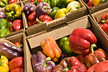
Sinaloa produces about 271,000 tons of bell peppers annually, out of Mexico's national production of 3.1 million tons. Most of this output is grown in protected agriculture systems with controlled temperature, humidity, and light, ensuring consistency in production.
Japan already imports a range of Mexican products, including asparagus, grapes, avocados, tomatoes, and mangoes. The addition of bell peppers strengthens agricultural trade between the two countries. The first test shipments are scheduled at the end of the current growing season, with the possibility of expanding volumes in the coming years.
At the same time, Sinaloa is also pursuing diversification in other crops. Negotiations are underway with a Chinese company interested in purchasing one million tons of sorghum through contract farming. Governor Rubén Rocha noted that sorghum cultivation will proceed only under guaranteed demand and with adherence to commercialization protocols.
On the domestic market, discussions between producers and federal authorities are focused on the commercialization of corn for the 2026 harvest. Mexico aims to produce 25 million tons of non-GMO white corn nationwide, with Sinaloa playing a key role as the country's largest producer.
Source: Mexico Business News