Last Thursday, the French Garlic Trade Association (ANIAIL) organized a videoconference to launch the 2025 French garlic campaign. Christiane Pieters, president of ANIAIL, and Hélène Rouffaud, coordinator of the association, took the floor alongside representatives from the various terroirs to present the results of the previous campaign in a few figures and take stock of the current season.
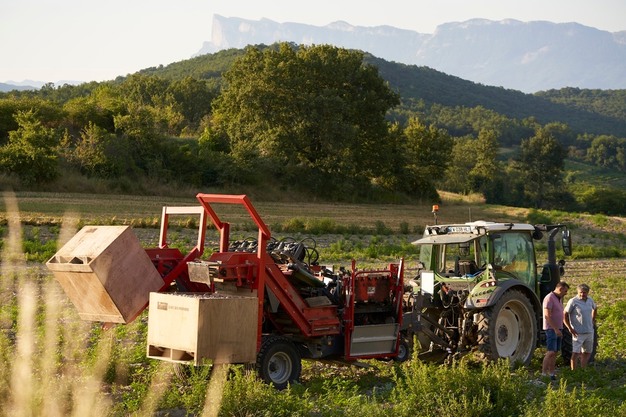 © Ferme des Arches
Decrease in imports and slight increase in exports
Lionel Foubert, vice-chairman of ANIAIL and director of Des Aulx du Sud-Ouest, points out that the self-supply rate stood at 47% in 2024. Imports into France dropped to 25,000 tons, which is 9% less than the previous year. Despite a 10% drop compared to 2023, Spain remains the most important source of imports, mainly for out-of-season garlic (15,142 tons), followed by China (6,535 tons, the same volume as last year). Chinese imported garlic is intended for distribution networks with a high quality/price ratio. Lastly, Argentina - which competes with Spain in the counter-season - recorded a 16% increase in 2024, at 1,738 tons. Conversely, exports increased by 4% compared to 2023, reaching 9,650 tons.
Consumption has been stable for several years
Consumption has remained fairly stable over the last few years, with 3.7 household purchases per year and 190g per purchase. 62% of households buy garlic at least once a year, and 54% of the volume is consumed by those aged 60 and over. There has also been an upward trend in the purchase price, mainly due to higher production costs and inflation (source: France AgriMer, based on Kantar Worldpanel).
In order to obtain more recent data on consumer trends, a study will be launched at the end of the month to help the sector better understand current consumer expectations and identify ways of attracting the younger generations.
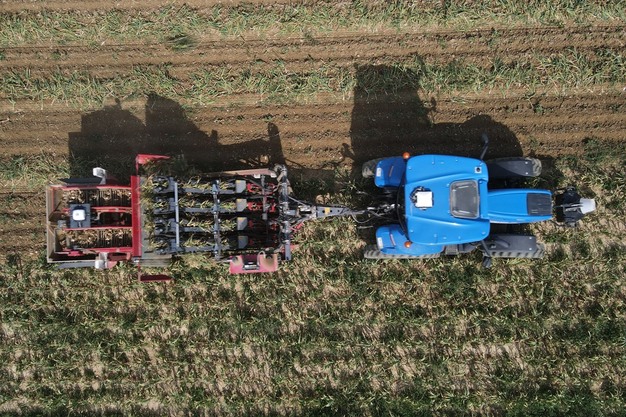 © Alinéa
PGI Drôme garlic: a normal campaign, with good quality and few deviations
The season got off to a shaky start, with the planting phase sometimes made difficult by the loss of plants caused by penicillium. The season then continued rather smoothly, apart from the heatwaves that affected yields during the harvest. In the end, according to Adrien Martel (PGI Drôme garlic), the harvest was "normal" in terms of volume, with very little variation and a quality that was rather interesting for conventional garlic. Sizes tended towards 7, confirming a trend towards larger sizes this season. For the organic garlic, the season was better than the previous two, with higher yields and larger sizes.
As far as seeds are concerned, Raphaël Reboul is predicting a downward trend, with volumes down by 15-20% this season, mainly due to penicillium and the very hot weather. This may lead to supply problems for the coming season. Quality, on the other hand, has been satisfactory so far.
Cadours purple garlic: a good choice of sizes, but volumes are down slightly
For Cadours' purple garlic, Sébastien Taupiac announced that planting went well. However, there was a major fly attack in the spring, which caused significant damage. The harvest went well, with yields slightly below average and a wide range of sizes - small, medium, and large - in contrast to the previous season, which was characterized by a majority of large sizes. The spring was relatively dry, which resulted in less marked coloring of the garlic, now stored in fridges at marketers.
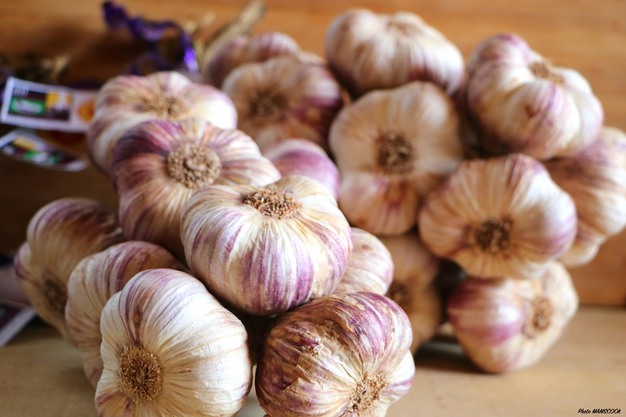 © ANIAIL Cadours purple garlic
Lautrec pink garlic severely affected by hail
This year has been catastrophic for the Lautrec pink garlic, due to severe hailstorms which devastated 170 ha out of a total of 300 ha. Then, the heatwaves that hit 15 days before harvest had an impact on the size of the crop, resulting in small or, at best, medium-sized garlic with very few large sizes. One thing is certain, according to Gaël Bardou, it will not be possible to have a full season until April, as is usually the case. The campaign is likely to come to an end in December. From a sanitary point of view, however, despite some concerns following the hailstorm, the returns have been quite good.
Arleux smoked garlic: Good quality, good shelf life, and decent volumes
For Arleux smoked garlic, this new season, which began on July 15th, looks very promising. Planting conditions were very good, the produce is of excellent quality, and the autumn and spring garlic harvests are good, especially for PGI Arleux smoked garlic. This year looks very promising, with good storage prospects. Size-wise, the harvest was described as fair, with the majority between 40 and 60 cm. The main concern that Eric Potdevin wished to highlight was the decline in production due to producers retiring without anyone taking over their farms.
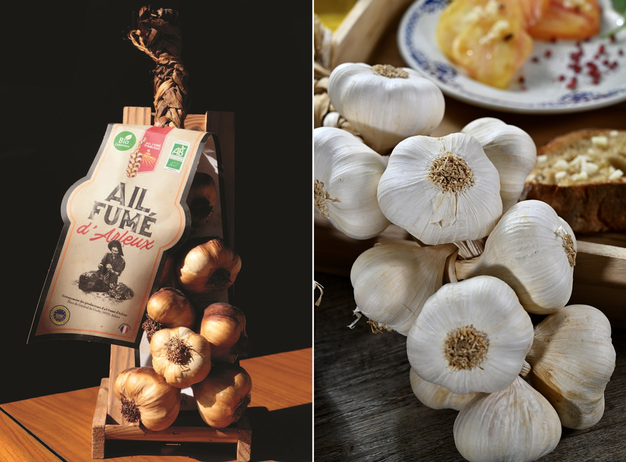 © ANIAIL
Billom pink garlic: Yields affected by the heatwave
Of the 50-60 ha cultivated, Laurent Heinis explains that 30 ha are planted with Billom pink garlic, which is a pink spring garlic (in the process of being recognized as a PGI). This is the same garlic - but not smoked - as the Arleux smoked garlic, which is planted later than most autumn garlic produced in France. Harvesting takes place after July 14th. This year, the heatwave at the end of June had a major impact on the harvest, which is therefore not very large, with a majority of small sizes (between 40 and 60). From a sanitary point of view, however, the situation is positive, with very little fusarium or blight. The remainder of the cultivated area is used mainly for autumn garlic production, aimed at the early fresh market as well as processing. The Puy de Dôme department is home to one of the largest garlic dehydrators in Europe.
Although it is a small production region today, it remains an integral part of the French garlic landscape, which in the 1960s boasted almost 2,000 hectares of cultivated garlic.
Piolenc garlic: A slight lack of volume has led to buoyant fresh consumption
The season is over for fresh garlic, which accounts for the bulk of production. On the whole, the season went well, with good planting. Despite a very cold spring marked by rain, harvests were fairly early, starting at the beginning of May. The rainfall had a slight impact on quality, with volumes 10% lower than last year. Production methods were geared towards large sizes, so there were few small sizes. However, there were a few problems with bursting at the end due to heavy rainfall in the spring. The slight lack of volume resulted in a fairly dynamic market, with high levels of garlic consumption in May. Overall, Benjamin Favalier describes the campaign as "normal".
Lomagne white garlic: A majority of large sizes
The Lomagne white garlic harvest took place a week early, and took place in very hot conditions. This year will be marked by a majority of large sizes, medium sizes, and very few small sizes. There are no health concerns, and production looks set to be stored in good conditions. Christiane Pieters also described it as a normal year.
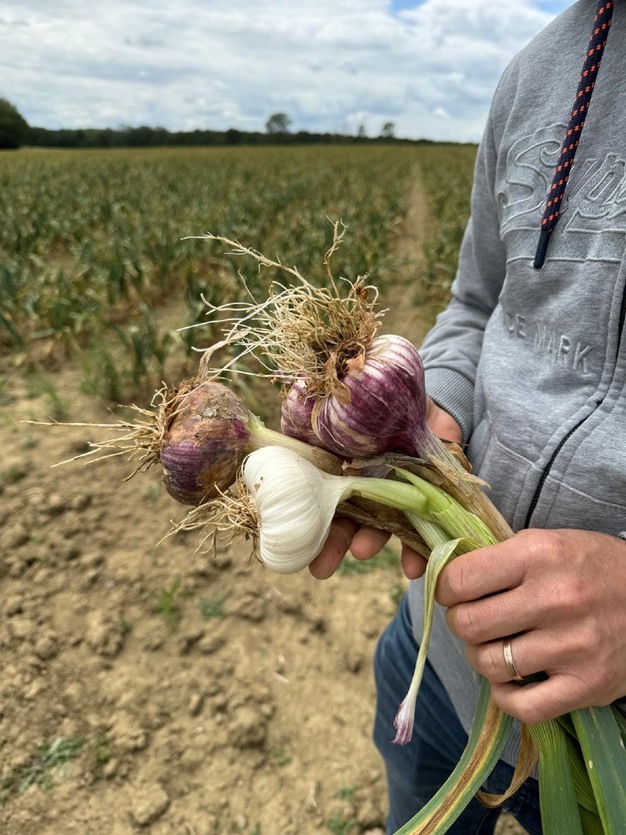 © Jardins du Midi 2025 campaign: Concern over the lack of availability of small sizes
On the whole, 2025 will have been a year of favorable growing and harvesting conditions, with good sanitary quality, enabling good storage and few sorting errors. Christiane Pieters nevertheless shared some concerns in terms of marketing, given the lack of small sizes, addressing a "red alert" to the mass retailers present at this campaign launch. "As we all know, demand is not in line with production this year. There will not be many small sizes, so we will have to find ways of marketing this good quality garlic in slightly larger sizes, while continuing to promote the French origin."
This concern is heightened by the fact that, over the past 5 years, we have seen a shift in listings within the supermarket network, with a greater proportion of small sizes. In supermarkets, small sizes are often associated with first-price products. This is one of the sector's current challenges: being able to add value to all French garlic production.