Minimal satsuma production is expected this season, with growers facing low or no yields across many groves. The situation follows a heavy crop in 2024 and reflects the alternate bearing cycle that has persisted since the Christmas freeze of 2022, which already reduced yields in 2023.
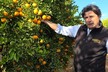
Jake Price, University of Georgia (UGA) area citrus agent, said many trees will produce little to no fruit this year. "From what I'm seeing this year, there are trees that have zero fruit. You may find acres with hardly any fruit. It's a big drop off," he said. "As far as how much, percentage-wise, it could be up to an 80% loss."
Despite the lack of fruit, Price advised growers to continue grove maintenance, including fertilization and pest management. "When there's less fruit or hardly any fruit, growers tend to ignore the trees. They might be like, 'I'm not going to put out fertilizer this year.' If you ignore the maintenance, you could have things build up. We don't want the psyllids to spread. We don't want any diseases to come in," he said. He added that maintaining tree health is also important to reduce susceptibility to cold damage.
The production decline is also pushing growers to consider alternative citrus varieties. Research plots at UGA are evaluating options such as Sugar Belles, navels, Tangos, and Shiranuis. "There are a lot of varieties out there that need to be tested. I've got a research plot with some Sugar Belles and a few navels and Tangos. A lot of people grow Shiranuis," Price said. "Dr. Mary Sutton has a research plot that she's putting in that will have a lot of different varieties. She's going to have a lot of data on varieties, but it's going to take time to get the trees planted and get some data. When you're working with a tree, it's not like a crop that comes in the spring and goes out in the fall. It's going to take years to get the trees to where they produce and to research the fruit."
Source: Citrus Industry