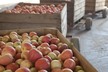
This year's Chuseok will take place later than usual, leading to higher shipments of apples and pears and lower wholesale prices compared to last year.
The Korea Rural Economic Institute (KREI) reported on September 7 that shipments of apples and pears during the two weeks before Chuseok are forecast to increase by 6.5 per cent and 7.2 per cent, respectively, year-on-year. Chuseok falls on October 6, nearly 20 days later than in 2023, allowing additional varieties such as Arisu, Yangkwang, and Shinano Gold to be marketed.
Apple shipments are projected to reach 54,200 tons, 31.2 per cent higher than the average year. Wholesale prices for Hongro apples at Garak Market during the Chuseok peak season (September 22 to October 5) are expected to decline from 55,700 won (US$40.50) last year to about 53,000 won (US$38.50) this year.
Pear shipments during the same period are forecast to reach 42,500 tons, an increase of over 7 per cent compared to last year. Hot weather in the summer delayed fruit development and shifted harvest timing, concentrating supply in the Chuseok season. Wholesale prices for 7.5 kg boxes of Shin Go pears are expected to fall by around 5,000 won, from 39,200 won (US$28.50) in 2023 to about 34,000 won (US$24.70) this year.
A Ministry of Agriculture, Food and Rural Affairs official noted, "Last year, due to an earlier Chuseok, the focus was on Hongro and Wonhwang, but this year a variety of types, such as Yangkwang and Shin Go, can be shipped." The Ministry also plans to increase the availability of gift sets made up of smaller-sized fruit, anticipating reduced fruit size in some lots.
KREI forecasts that total apple production this year will be in the range of 440,000 to 460,000 tons, a decline of up to 3.7 per cent from 2023, mainly due to sunburn damage caused by high temperatures. Pear production, by contrast, is expected to increase by about 14 per cent compared with last year, reaching 203,000 tons.
Source: ChosunBiz