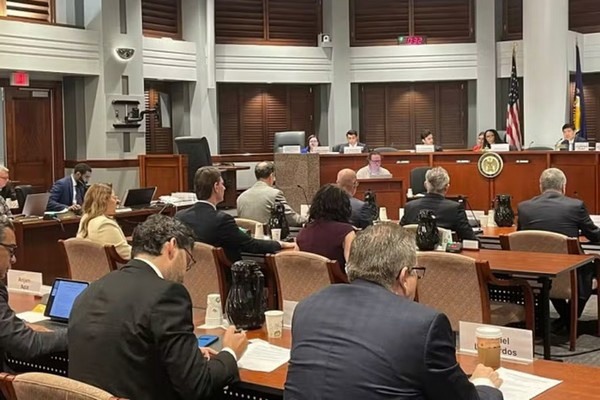
The Director of International Relations at the Brazilian Confederation of Agriculture and Livestock (CNA), Sueme Mori, represented the sector on September 3 in a public hearing in Washington, United States. The hearing was organized by the United States Trade Representative (USTR) under Section 301 of the Trade Act, which allows investigations into practices considered "unfair or discriminatory" and enables sanctions if irregularities are found.
Mori rejected allegations of unfair trade practices involving Brazilian products in the U.S. market. "Brazilian farmers operate under strict compliance rules, ensuring safety, quality, and transparency for international consumers, including Americans," she said. She stressed that Brazil's competitiveness in agribusiness comes from natural resources and investments in innovation rather than unfair trade.
 © Brazilian Confederation of Agriculture and Livestock
The ethanol market was one area raised during the hearing. Mori noted that in 2024, Brazil imported 17 times more ethanol from the United States than from India, while Mexico did not register significant exports. She added that Brazil's limited network of trade agreements means that only 5.5% of agribusiness exports benefit from preferential tariffs.
Mori highlighted the interdependence of trade between the countries. "On the one hand, the U.S. is the third-largest destination for Brazilian agribusiness exports, and on the other, we are a major consumer of U.S.-produced inputs, technologies, and industrial equipment," she said.
According to CNA, in 2024, Brazil imported more than US$1.1 billion in fertilizers, agricultural machinery, and seeds from the U.S. market. Mori concluded by emphasizing the need for continued engagement. "We reiterate the willingness of Brazilian agribusiness to engage in constructive dialogue and cooperation with the United States, convinced that a trade relationship based on evidence, integrity, mutual respect, and common goals is essential to address global challenges in agriculture, food security, and sustainability."
Source: DatamarNews