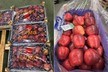
Afghanistan and Pakistan have initiated a Preferential Trade Agreement (PTA) targeting reductions in tariffs for eight key agricultural commodities, as disclosed by the Afghan embassy in Islamabad. The accord aims to lower customs duties on four Afghan exports to Pakistan, grapes, pomegranates, apples, and tomatoes, and four Pakistani exports to Afghanistan, mangoes, kinnows, bananas, and potatoes.
The tariff rates, formerly pegged at over 60%, are slated to be capped at 27%. The agreement, endorsed by senior Afghan and Pakistani commerce officials, notably Mullah Ahmadullah Zahid and Jawad Paul, takes effect on August 1, 2025, with a one-year duration and renewal option. The initiative arises amidst ongoing political and security tensions, yet acknowledges the persisting reliance of both nations on overland trade routes, with fruit exports being a recurrent element in seasonal trade.
Trade figures for the first half of 2025 illustrate nearly $1 billion in bilateral exchange, with Afghan exports at $277 million and Pakistani exports at $712 million. This uptick is partly linked to the surge in Pakistani exports like medical supplies, parboiled rice, and sugar. The prevailing trade volume, however, remains limited compared to potential estimates of $8 to $10 billion annually.
Trade impediments persist, largely due to border and security issues and restrictions in trade facilitation. Regular border point closures at locations like Torkham and Spin Boldak, instigated by political or security disturbances, often disrupt trade and inflict economic setbacks on commercial entities. In addition, complexities regarding customs protocols and transit infrastructure further constrain seamless goods movement.
Source: Daily Times