In the competitive world of the agri-food sector, the Ecuadorian Institute for Popular and Cooperative Economy (IEPS) plays a role connecting small-scale producers, local associations, and both domestic and international buyers.
Arianna Burgos, director of the IEPS, said their goal is to help small-scale producers bring their products to market while meeting quality, fair trade, and sustainability standards, thereby increasing participation in foreign trade and positioning Ecuadorian products in new markets.
 © IEPS
The IEPS has a marketing structure that covers three markets: the public, private, and international sectors. "In the first half of 2025, government contracts generated more than $50 million. Sales to the private market exceeded $5 million, and exports, which are still in their initial phase, generated $2 million. There's significant potential to grow. It's one of our main challenges and goals," said Burgos, referring to the need to enhance the global positioning of the sector.
"The IEPS has also arranged more than $ 1.5 million in direct financing and trained over 7,000 people in the sector. 71.9% of the people trained are women, and 33% of all trainees are under 30. This demonstrates that our model is truly making an impact, especially in rural areas," she emphasized.
 © IEPS Arianna Burgos
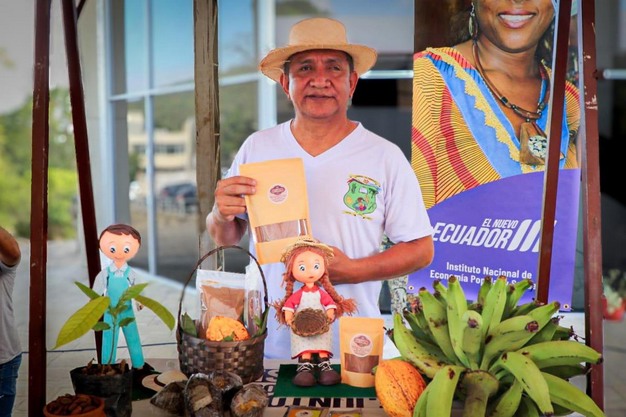
The best-performing products are organic bananas, cocoa, dairy products, plantains, and various processed agri-food products. "An association from the Cantón de Milagro (Guayas) managed to export more than $ 1.17 million worth of premium bananas. Other cooperatives in Azuay and Cañar have signed agreements with companies in the dairy sector such as Toni and Nutrileche, generating sales of over $600,000," she explained.
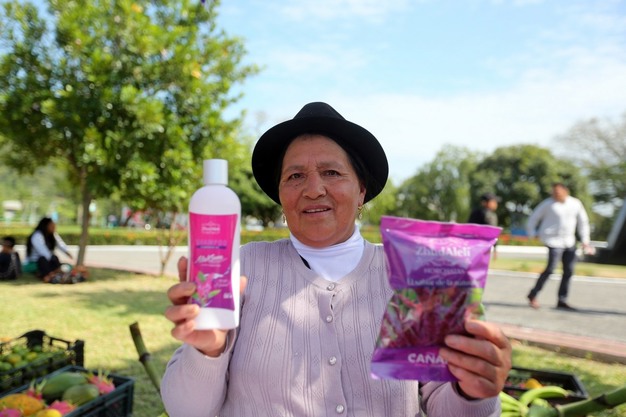
There are still challenges. "Many entrepreneurs still lack the necessary certificates or registrations. There are also barriers to accessing credit. Currently, only 2.2% of the sector's total sales are exported."
 © IEPS
To address this, IEPS collaborates with international partners such as the FAO and the World Fair Trade Organization (WFTO). Additionally, a digital platform called Ecuador Agroalimentario has been established, now including more than 100 member cooperatives and small-scale growers.
"Cooperatives need to become more proactive. We must promote their practices and purchase their products," Burgos stated. Every product is more than just a business opportunity; it also represents a commitment to territorial development, inclusion, and Ecuador's identity, " she concluded.
For more information:
Arianna Burgos
Institute of Popular and Solidarity Economy (IEPS)
Ecuador
Tel: +593 (0) 2 3828 070 Ext. 507
Email: [email protected]
www.economiasolidaria.gob.ec