Researchers at the University of New Hampshire (UNH) have found that locally grown seedless table grapes could become a viable crop for northern New England. After a seven-year study conducted by the New Hampshire Agricultural Experiment Station (NHAES), results show that certain grape varieties perform well in the region's cooler, humid climate. The findings, published in HortScience, highlight varieties such as Mars, Canadice, and Lakemont as promising options for commercial production.
"There are several seedless table grape varieties that are well adapted to our region," said Becky Sideman, professor at UNH's College of Life Sciences and Agriculture. "These varieties offer unique flavors and expand options for local producers."
 © The Woodman Horticultural Research Farm
Grapes typically grown in warmer climates, such as Vitis vinifera, dominate the U.S. market. However, with just 106 acres (43 hectares) of grapevines reported in New Hampshire in 2022, interest is growing in hybrid and American varieties suited to northern environments. While wine grapes have been studied previously, this is the first comprehensive evaluation of seedless table grapes for the area.
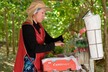
Led by Sideman, research scientist Kaitlyn Orde, and Extension specialist George Hamilton, the study tested eight seedless grape varieties at the UNH Woodman Horticultural Research Farm in Durham using two training systems: vertical shoot positioning (VSP) and Munson.
The eight varieties included Canadice, Concord Seedless, Lakemont, Marquis, Mars, Reliance, Thomcord, and Vanessa. Thomcord and Marquis were found to be weak and highly susceptible to fungal disease, leading to their removal by the fourth year. The remaining six were evaluated for pest and disease resistance, fruit yield, quality, and postharvest weight retention.
 © The Woodman Horticultural Research Farm
Among the top performers, Mars, a blue slipskin grape, stood out for its disease resistance, high yields, and excellent fruit quality. Canadice (red slipskin) and Lakemont (green) also performed well, with strong storage characteristics. Vanessa, a non-slip-skin red variety, and Concord Seedless offered additional options, though with slightly lower yields.
The study also found that while the VSP training system initially produced higher yields, the Munson system eventually surpassed it, suggesting better long-term results for commercial growers.
"This research helps growers in colder climates understand which varieties to choose and how best to manage them," said Sideman. "Our goal is to support the growth of a local seedless table grape industry in New England."
The study was supported by the USDA National Institute of Food and Agriculture, the state of New Hampshire, and the NH Department of Agriculture through the Specialty Crop Block Grant program.
For more information:
University of New Hampshire
Tel: +1 603 862 1234
Email: [email protected]
www.unh.edu