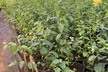
Zimbabwe is increasing its role in the global blueberry trade, supported by high-altitude production areas and the use of precision irrigation systems. The country supplies fruit between May and October, a period when output from several major producing regions is limited.
According to Christo van der Westhuizen, agronomist at Netafim Southern and East Africa, Zimbabwe's production window provides access to export markets during an off-season period. "Zimbabwe produces world-class blueberries during a key global off-season window, when few competitors supply high-quality fruit," he says. "This timing allows access to premium markets like Europe and increasingly China at higher prices, with strong demand when major producers have low or no supply."
With Peru, South Africa, and Northern Hemisphere suppliers operating at different times of the year, Zimbabwe's harvest window offers commercial positioning, provided export standards are consistently met.
Production areas are typically located between 1 000 m and 1 800 m above sea level. These regions experience moderate daytime temperatures and cooler nights during the growing season. "Zimbabwe is highly suitable for blueberries due to its high-altitude climate, which provides moderate temperatures with relatively small daily fluctuations. Combined with good sunlight, rich, well-drained soils in many areas and reliable irrigation potential, these conditions support high yields of premium-quality fruit with excellent flavour and size," Van der Westhuizen explains.
Despite these environmental factors, irrigation and nutrient management remain central to crop performance. "Blueberries have shallow, sensitive roots that need consistent low soil pH, uniform moisture, and precise nutrient delivery without excess water or dry spells," says Van der Westhuizen. "Netafim's drip irrigation and precision practices suit blueberry production well because they help maintain those conditions."
He adds that system installation, agronomic support, and operational reliability influence outcomes in high-value blueberry production.
Maintenance is identified as a core requirement. "Without proper maintenance, no irrigation system can deliver what it was designed and paid for. As soon as uniformity is influenced, the whole crop yield will go down," he says. Regular flushing, filter inspection, pressure checks, and timely repairs are required to maintain system performance.
For scheduling, Van der Westhuizen advises growers to use drainage as a reference point. "In potted systems, irrigate when drainage from the pots reaches the required drain percentage levels, ensuring the root zone stays uniformly moist without waterlogging." In soil systems, monitoring the shallow root zone with probes or augers supports consistent moisture management and helps limit stress or nutrient leaching.
"Precision irrigation, proper maintenance and consistent monitoring are essential if you want to produce high-quality fruit and maximise returns."
Source: FoodForMzansi