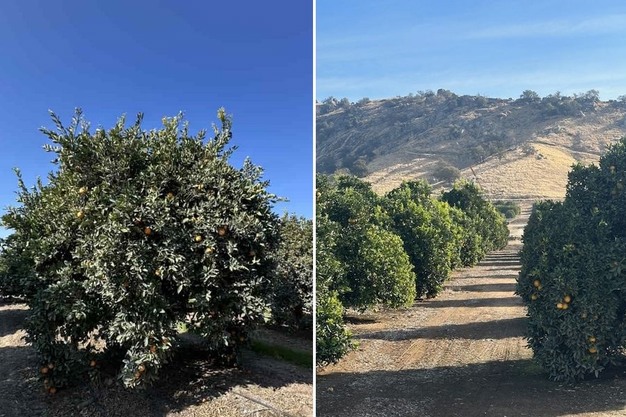
The new California citrus season is well underway with navels, clementines, grapefruit and lemons being harvested. Demand for California citrus from USA consumers continues to show strength and the outlook is promising. "In general, fruit sizing is larger than last season with sizing forecast to be medium/large, boding well for retail promotions and movement," says Daniel Kass with The Autenrieth Company." Larger sizing is the result of more normal temperatures this past summer as opposed to the extended heat waves during the summer of 2024. In addition, October saw early rains, which is a good start to the Sierra mountains snowpack. "Currently, warm days, cool nights, and intermittent rains in the near-term forecast are perfect for the development of the crop."
Korea shows strong interest in mandarins
Typically, sales activity during the early season is focused on the domestic market with limited export demand. However, the overseas markets for California citrus aren't oversupplied with southern hemisphere fruit, resulting in optimism for more early season export demand, starting in December. Korea has been importing increased volumes of California mandarins in the last few years as their domestic production is declining. With the duty now being at zero percent, further expansion is possible, although it will likely result in reduced demand for oranges as a result of cannibalization. "No other markets are showing as much interest in California mandarins as Korea because production of local mandarins in traditional markets has greatly increased," Kass commented.
An early start to the export season is good news for growers and shippers. International markets have shown declining demand over the past seven years, but it seems that shipments have bottomed out. "While I don't foresee California ever returning to the volume of overseas shipments seen in the first part of this century, there is still demand from those consumers who value USA citrus for its quality and food safety," he said. In addition, there will be spot opportunities at times when other growing countries are faced with reduced supply due to weather or pest related issues.
 © The Autenrieth Company
Headwinds from production and export perspective
While domestic demand is strong, sizing is favorable, and exports are expected to start up early, the California citrus industry is still facing many headwinds. Trade issues between the USA and the rest of the world remain ongoing and are especially challenging in the Canadian and Chinese markets. In addition, shipping times are much slower compared to pre-Covid times. "While ocean transit times have stabilized, all trade lanes in general are much slower. Shipping lines act as if they have very little interest in carrying export products," Kass said. "Certainly, there is no shipping line that provides the customer service it offered prior to Covid."
Other factors that challenge export development are inflation and California's high cost of production, unfavorable exchange rates for overseas importers, and improving quality as well as expanded production from other growing nations. Volume and quality of citrus from China for instance has greatly increased, reducing export opportunities from California to China. In addition to supplying its domestic market, China is also making strong inroads into other Southeast Asian markets, pushing out USA citrus. Due to increased quality, citrus from Egypt now reaches markets that used to be important export destinations for California.
In addition to competition from other growing regions, California citrus also undergoes heavy competition from other produce items. Chile is already airfreighting cherries to Asia and exports about 25,000 containers per season. The majority of this number reaches China. Twenty years ago, cherries barely existed in Chile and California navels dominated the Asian markets for Lunar New Year. "Unfortunately, this is no longer the case and California citrus no longer has the global cachet it once held."
Limit access from other citrus growing countries
Another concern is the number of citrus producing countries applying for access to the USA market. "The southern hemisphere citrus season overlaps with the start and end of the California citrus season, which is problematic." However, northern hemisphere producers are a bigger threat to California since their timing of harvest is exactly the same, resulting in an entire overlap. "It is important to limit additional access from southern hemisphere sources as well as block access from any northern hemisphere growers who currently don't have access," Kass concluded.
 For more information:
Daniel Kass
The Autenrieth Company
Cell/WhatsApp: +1-661-425-4725
[email protected]
www.autenriethco.com