 The water concerns raised by the residents of the Limpopo town of Giyani are perfectly legitimate, but the reasons for the shortage are sought in the wrong place, maintains Philé van Zyl, ZZ2 director.
ZZ2, South Africa's largest tomato producer within a diverse portfolio of fresh produce, has been accused by the Department of Water and Sanitation of contravening the Water Act through unapproved alterations to water structures upstream of the Middle Letaba Dam. Furthermore, it is alleged that this is affecting the flow of water to Giyani, a claim the company strongly denies.
“The Middle Letaba Dam has long been the subject of controversy. The matter has been particularly badly managed by government officials and politicians during the last decade. Over this period ZZ2 has received around 15 different delegations from the department in their efforts to ensure compliance. We have even facilitated aerial inspection opportunities for the government officials to view our farm dams first hand,” Van Zyl says. “During no single visit have they been able to find evidence that we are unlawfully extracting water.”
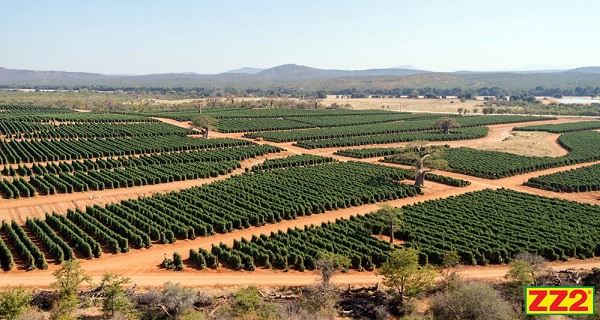
ZZ2 extracts no water from Middle Letaba Dam
In the most recent issue it is claimed by the department that alterations to five minor structures had taken place without the necessary authorisation. He notes that the water volume encompassed by the ZZ2 water structures in question total less than 1.2 million cubic metres, a fraction of the volume of water needed by Giyani’s residents served by the 172 million cubic meter Middle Letaba Dam.
He maintains that two of the claims are totally baseless, while a third concerns changes made by a previous owner and the final two points address the lining of two water structures with plastic to address water leakages.
ZZ2’s activities in the Mooketsi area – mostly tomatoes and early avocados – are irrigated from their farm dams solely filled with groundwater and rainwater, with no water taken from the Middle Letaba Dam which he calls “a white elephant”.
The history of water infrastructure in this area is a complicated one: over forty years ago the erstwhile water department committed a number of errors in the construction of the Middle Letaba Dam which condemned it to obsolescence from the outset.
It was built upstream from the confluence of the Middle and Klein Letaba rivers (tributaries which eventually join the Letaba River before it flows through the Kruger National Park to the Indian Ocean) in what is, Van Zyl says, essentially a non-perennial dry streambed.
Moreover, it is vastly oversized for the meagre flow of the river. It is currently 0.7% full and has only ever once been full, he says: during floods twenty years ago.
To rectify the problem of water supply to Giyani, the department had planned to complement the Middle Letaba’s water with water from the Klein Letaba River, but it never materialised.
R3 billion corruption in delayed Giyani Bulk Water Scheme
Then, in 2014 the government launched the Giyani Bulk Water Scheme with a pipeline linking the Middle Letaba Dam with the Levubu River’s Nandoni Dam, currently 101% full.
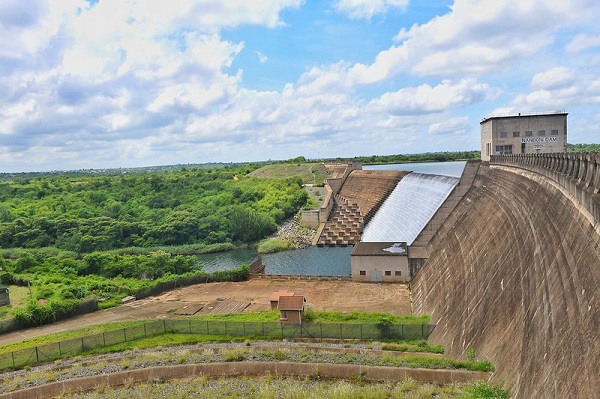 The Nandoni Dam on the Levubu River, visited by Pres Cyril Ramaphosa last weekend, is 101% full (photo: Government Communication and Information Service)
The concept is, he confirms, the obvious and only solution, given the strong flow of the Levubu River and the flatness of the terrain, but the project became mired in corruption, costs eventually running to R3 billion (over 162 million euros) before collapsing with close to no progress made.
The project was the subject of a forensic investigation ordered by the President’s Office in what the Minister of Water and Sanitation earlier this year termed an “embarrassment”.
It is this “embarrassment” for which politicians are trying to find a scapegoat, Van Zyl asserts.
The residents of Giyani have been promised that the Giyani Bulk Water Scheme supplying them with water from the Nandoni Dam would finally be finished this year. This past weekend President Cyril Ramaphosa visited the site in person.
ZZ2 has, with the assistance of hydrological engineers, thoroughly investigated the matter. A hydrological analysis will form part of their submission to the Department of Water and Sanitation in which they set out their reasons why they should not be issued with a directive.
“We believe the causes for the water problems are being sought in the wrong place. We will defend ourselves and we will follow due process to submit our case.“