Tighter supply and stronger pricing. That's what looks to be happening with bananas and plantains right now while pineapple is seeing almost the opposite of that.
Bananas: "The market is looking to get much tighter. We're seeing quality improve, but more importantly we're in that season of cyclicality where fruit gets a little tighter and gets more expensive," says EXP Group's Anthony Serafino. "As we enter into November-December and even into the first quarter, we expect bananas to be tight and expensive."
He adds that tightening of merchandise from the multinationals are really affecting markets, as are newly applied tariffs on produce brought into the U.S. this year. "We haven't really dealt with tightness of fruit and tariffs so that's pushing prices even higher than usual," adds Serafino. "Right now, there is also a little less of an appetite for retailers to be eating that cost and the consumer will be responsible for that rise of cost."
 © EXP Group
Indeed, high banana spot prices in Ecuador are affecting 2026 contracts. "We're seeing a lot of exporters and banana growers in Ecuador be more hesitant to sign contracts because they don't know what the year will bring," he says. "The first half of the year is typically more expensive, but the second-half of the year, at least in Ecuador, fruit will be plentiful."
This is all happening at a time when demand is strong for bananas given the school year is well underway and the holiday season is just ahead. "The next four to six months in bananas will be quite tight and quite expensive," says Serafino.
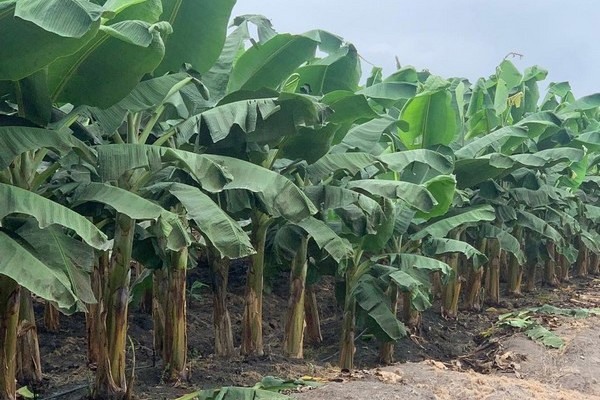
Plantains: It's a similar picture for plantains in which tariffs and an increasingly tight supply is pushing up pricing. "The quality in Ecuador has been poor which has affected Ecuador product a lot. Weather and disease have been an issue and those two things are coming together, and when it's so expensive, people want things to be perfect," he says, adding that supply from Central America on plantains has been stronger but it is also tightening up there.
Meanwhile there are concerns that Colombia will be impacted by stronger U.S. tariffs and if so, it's expected to further constrain the plantain category.
 © EXP Group
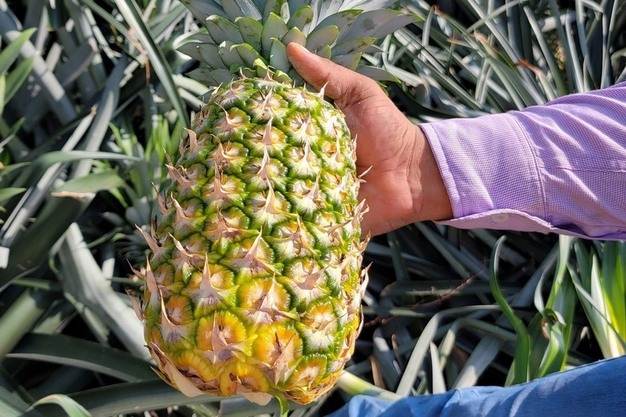
Pineapples: Pineapples from Costa Rica are seeing size challenges "Retailers like smaller fruit because they can sell it for less but there's only big fruit so the market is cheap and people are trying to move it," says Serafino, noting that while retailers prefer size 6 and 7 on pineapples, availability is largely on 5s.
As for demand? "It was strong in the summer but it's cooled down a bit–we are moving the merchandise, just not at the same price point that we're moving in the summer," he says.
 For more information:
Anthony Serafino
Exp. Group LLC
Tel: (+1) 201-662-2001
[email protected]
www.expgroup.us