Hybrid potato breeding is reshaping how new potato varieties are developed and distributed, offering opportunities for faster variety turnover and improved access to quality seed material in regions where certified seed is scarce.
According to Hans Huistra, "A hybrid potato tastes and looks just like the potato we all know. The difference lies in the breeding technique, how the variety is developed. With the right genetics, hybrid breeding allows us to develop new varieties faster." He explained that hybrid breeding enables resistance traits to be introduced up to twice as quickly as with conventional methods and that hybrid potatoes can be grown from seed, creating new market possibilities.
 © HZPC
From research challenge to practical application
Hybrid breeding has been long established in crops such as maize and tomato, but was once thought impossible for potatoes due to genetic barriers to self-pollination. This changed in 1999 when a gene discovered in a wild potato enabled self-pollination, opening the way for hybrid potato development.
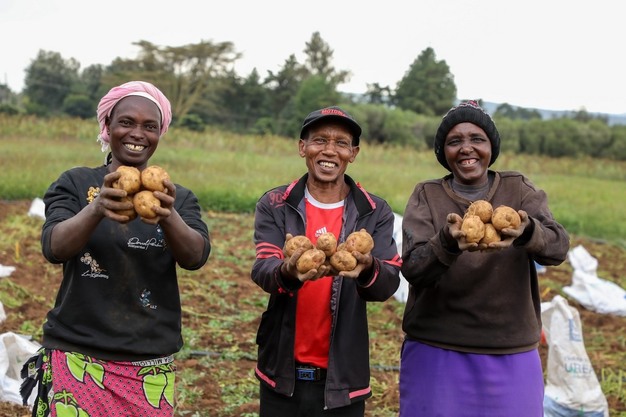
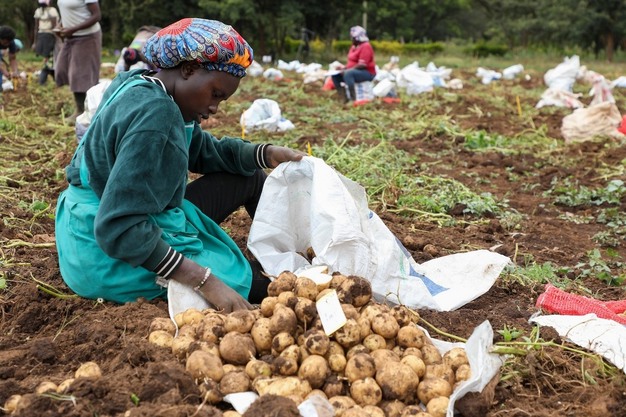
The approach has strong potential in regions such as Africa and Asia, where access to high-quality seed potatoes remains limited. In Kenya, only about 10% of small-scale potato farmers use certified seed. "For many farmers, quality seed is unavailable or unaffordable," said Ad Vrolijk, Program Leader Hybrid Breeding at Royal HZPC Group. "As a result, part of the harvest is reused as seed, leading to yield losses and reduced food security."
 © HZPC
How hybrid breeding differs from classical methods
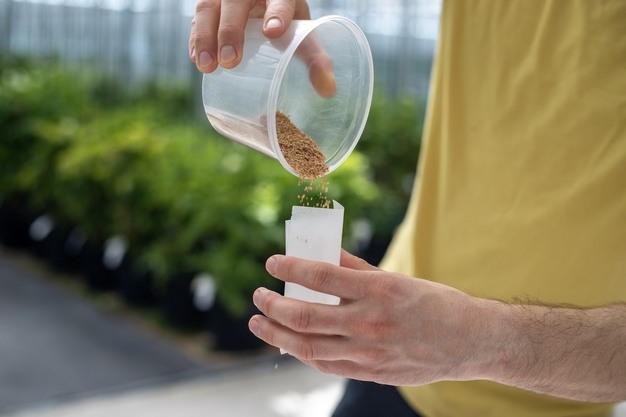
In conventional breeding, two varieties are crossed and thousands of offspring are screened for desirable traits, with early selection often carried out in Europe. Hybrid breeding, by contrast, allows direct testing in the target regions. Pure parent lines are created through repeated self-pollination, producing genetically uniform offspring. Each seed then grows into an identical plant, making production faster and more predictable.
 © HZPC
Field results and ongoing trials
In Kenya, hybrid breeding trials have produced varieties matching the yield of the local standard, Shangi. One candidate, D23HY2515, showed strong resistance to late blight under both treated and untreated conditions. "In Kenya, late blight is present year-round," Vrolijk said. "Farmers who use crop protection can save up to 30% thanks to resistant varieties."
Seed potatoes remain relevant
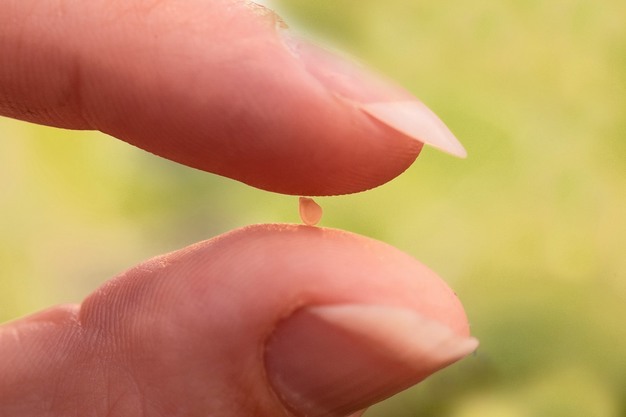
Despite advances, seed potatoes remain essential for table potato production. "Even with hybrid varieties, tubers offer the most reliable yields," said Huistra. Plants grown from seed take longer to mature, requiring additional seed production cycles before large-scale planting.
 © HZPC
Hybrid breeding is expected to gradually extend to Europe, though the process is still in early stages. "Creating parent lines takes time," said Vrolijk. "But once established, hybrid potatoes can be tailored to regional needs and scaled rapidly."
 © HZPCFor more information:
HZPC
Tel: +31 (0) 513 48 98 88
Email: [email protected]
www.hzpc.com