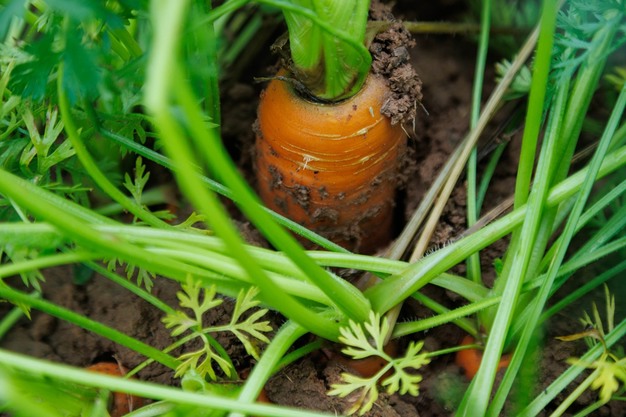
At this stage, French carrot production is of good quality, with a balanced representation of all sizes. Yields, however, could be revised downwards as a result of this summer's various climatic events. Prices are currently stable, with an upward trend, but still much lower than in the previous season. Astrid Etèvenaux, director of the producers' association Carottes de France, provides an update.
 © AOP Carottes de France
Stable national acreage
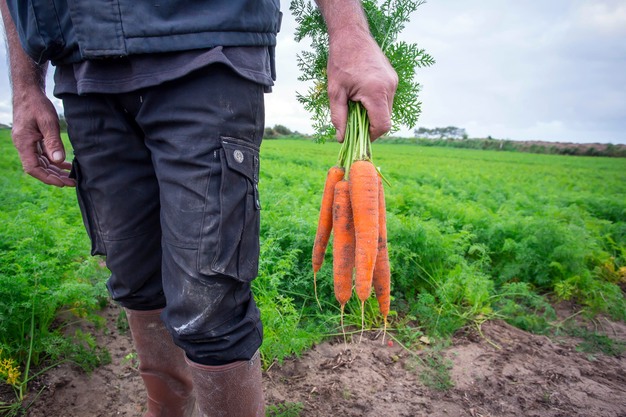
According to the latest figures from Statistique Agricole (2023), the surface area devoted to carrots for the fresh market in France is 10,270 hectares, a figure that is stable overall. While there are no plans to increase the area under cultivation in order to boost production, a slight increase may be needed to maintain output. "For the first two production areas (southwest and Normandy), the idea is to keep acreage stable. However, given the general drop in yields observed over the last few years (around 5 to 10 tons per hectare), producers may have to increase acreage slightly in order to maintain production levels," explains Astrid Etèvenaux. This drop in yields is largely due to the gradual withdrawal of several active ingredients, especially those used to control weeds, the number one scourge of carrot crops.
 © AOP Carottes de France
"Yield variations to be expected"
Seedlings sown in June suffered from the very high temperatures seen in all regions, leading to significant plant losses. In the southwest, losses reached around 15% of all sowings, due to the heat, as well as to weed pressure, nematodes, and hail in August. "New sowings were carried out, but late, especially in the Normandy basin, which was also affected. And the plots that were not destroyed or burnt were still affected, regarding almost 55% of the area in the southwest," according to the director. Yield reductions are therefore to be expected. The forecast tonnage has also been revised downwards compared with last year, for equivalent production areas. "We are in a supply/demand balance, with a lower potential than last year. All the basins have been in production since the end of August. At this stage of the campaign, we do not need to resort to imports, as French supply is sufficient. However, the development of available volumes is still subject to a number of uncertainties, given the vagaries of the weather, both past (this summer's heatwaves) and future."
"We will not be able to stay at this price level for the whole campaign"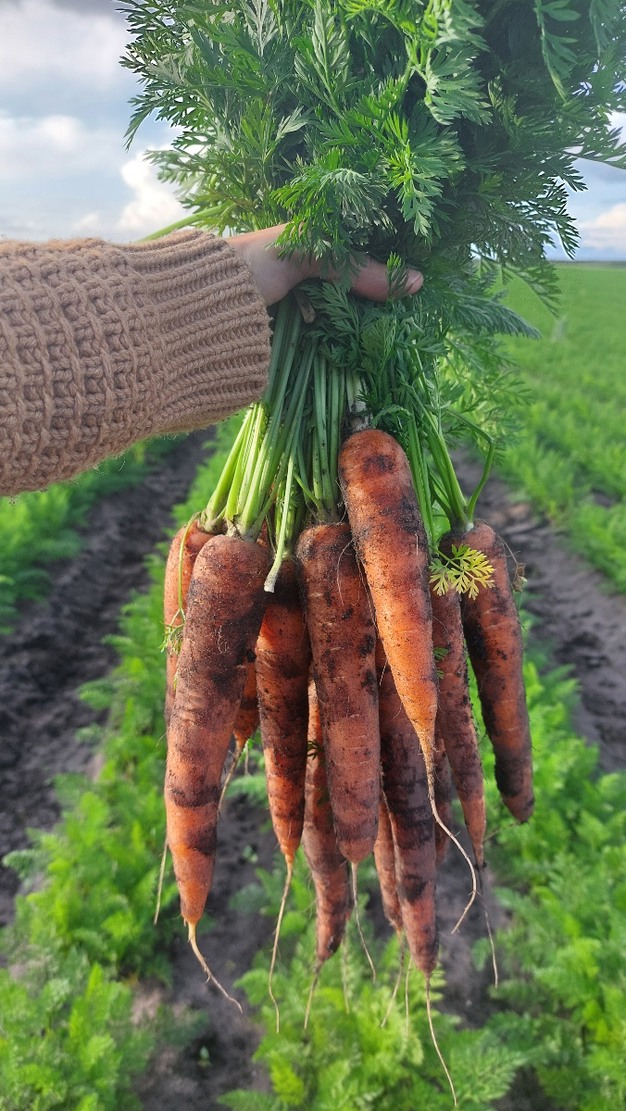 © AOP Carottes de France
In terms of prices, the level departing from the station is currently down by around -18% compared to N-1 at the same time. During the previous season, a gradual erosion of prices had already been observed. The season had started with good prices, which had gradually fallen in the face of greater supply. "This drop was not proportional to the price levels on the shelves," explains Astrid Etèvenaux. "Last year, according to RNM quotations, dispatch prices were down by 11%, while retail prices were only down by 7%."
"Carrots remain one of the most affordable vegetables on the shelves. But while carrot prices remain attractive, they are not evolving at the same pace as those of other vegetables, even though carrots are becoming increasingly expensive to produce. Over the last marketing year, the average retail price of conventional carrots dropped by 8% compared to the previous year, while the total price of vegetables rose by 1%. In the organic sector, the average price of carrots dropped by 4%, while the total price of organic vegetables rose by 5% (Kantar data, August 2024 to April 2025). We will have to keep a close eye on developments, but what is certain is that we will not be able to stay at this price level for the whole campaign."
The market, for its part, is sluggish. "Consumption is not catastrophic but remains calm, as is the case for most fresh fruit and vegetables at the moment," explains Astrid Etèvenaux. "The summer period is always complicated for carrots, as they have to compete with summer vegetables, but the momentum generally returns in the fall. However, it is not the case this year, as we enter the most important months of the season."
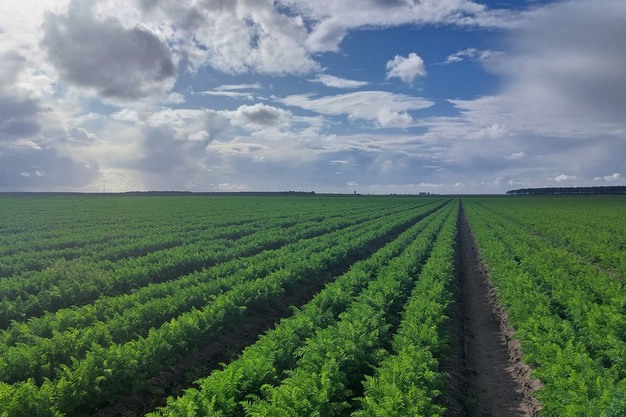 © AOP Carottes de France Primeur carrots from the Nouvelle-Aquitaine region
The Nouvelle-Aquitaine region, specialist in primeur carrots
As the leading producer of carrots for the fresh market, the Nouvelle-Aquitaine region alone accounts for 46% of French production, covering 4,500 hectares. The Gironde and Landes departments currently have three Producer Organizations (POs) that are members of Carottes de France, as well as three independent producers.
The region also stands out because it specializes in primeur carrots, thanks to its soil and climatic conditions. "The region's sandy soil allows for better root development (faster growth), as well as natural drainage, making irrigation much easier to manage. Excess water is quickly eliminated, and the soil warms up more quickly. As a result, New Aquitaine can start harvesting early carrots as early as mid-May, whereas the earliest crops in Normandy do not start until July," explains Astrid Etèvenaux.
 © AOP Carottes de France
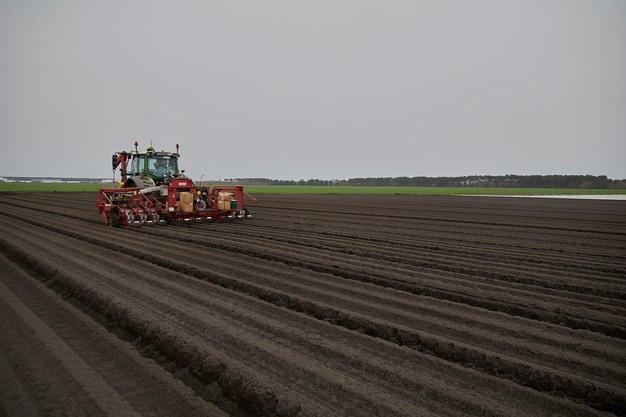
In Nouvelle-Aquitaine, two sowings can be made during the year: 1 for primeur carrots and 1 for seasonal carrots, enabling the region to be present on the market 10 months out of 12.
It was for this reason that the first carrot trials were carried out in the mid-1980s, before production expanded rapidly at the end of the decade. "The basin's interest clearly lay in the development of early produce, which benefits from major export outlets. "Ten years ago, more than 50% of volumes were exported, compared with 25-40% today within the producers' association." (By way of comparison, only 5% of seasonal carrots are exported). The main destination for French primeur carrots is the UK, followed by Germany, Belgium, Eastern Europe, and Spain.
Carrots suffer from a lack of visibility on the shelves
Carottes de France represents fresh market operators accounting for 60% of national production, spread across the four major regions of Nouvelle-Aquitaine, Normandy, the North, and the Southeast. The producers' association wants to work on the carrots' position on supermarket shelves. "It is the 2nd most consumed vegetable after tomatoes. Yet, unlike tomatoes, carrots suffer from a major lack of visibility on the shelves. This is something we want to work on within the association, not only by studying the reasons for this, but also by raising awareness of the problem among French retailers," explains Astrid Etèvenaux.
For more information: © AOP Carottes de France
Astrid Etèvenaux
Carottes de France
[email protected]
www.carottes-de-france.fr