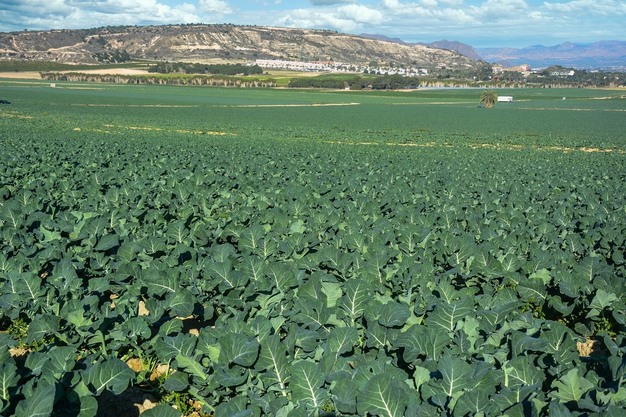
The heat has sped up the growth of brassica and leafy vegetable crops in Spain's main production areas, whose exports have not yet taken off due to the supply still available in central and northern European countries. However, the transition to Spanish produce is definitely expected to take place in around a week's time. While the broccoli acreage seems to have remained at the same level as last year, the cauliflower acreage could have been reduced by between 15 and 20%.
 © Verdimed
"At the moment, we are working with about 40% of the usual programs for this time of year," says Jesús Pérez, Sales Director of the Murcian company Verdimed. "There is still production in northern Europe because the weather has been warmer than usual."
"The Netherlands still has significant quantities of broccoli and especially cauliflower at low prices, while other countries, such as the Czech Republic, Slovakia, and Switzerland, for example, have not needed to import so far. We are now starting slowly with small volumes in the domestic market, Scandinavian countries, Germany, and France," he says.
Added to this is the fact that, until a few days ago, temperatures have been quite high in most parts of Spain, so the harvests have taken place around a week ahead of schedule.
"It's not an ideal scenario, because it's forcing us to sell, but it's difficult to accurately predict the harvest volumes when you depend on the weather, so sometimes you get such overlaps with Europe's local productions," says Jesús Pérez. Now temperatures are dropping, which in addition to regulating production will also encourage the consumption of these products," says Jesús, who expects Spanish produce to be already dominating the markets in around a week's time.
 © Verdimed
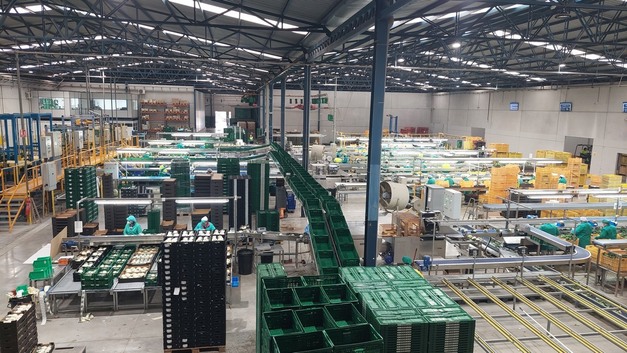
Verdimed mainly produces and markets broccoli and cauliflower, and also has a lot of spinach, which is sold mainly in bulk to packers in different European countries, with a significant presence in the United Kingdom.
According to its sales director, the acreage devoted to broccoli will be similar to last year's, while the cauliflower acreage could fall by between 15 and 20%, according to the main seed companies. "The reduction in cauliflower is due to the lack of profitability in the previous season, when there was a perceived oversupply and prices fell."
Although it's still too early to know how prices will evolve, Jesús says that labor costs are still rising by 2% annually due to salary increases. He also highlights the unexpected rise in the cost of land. "Renting land to grow crops has suddenly become very expensive due to a shortage and a lack of guarantees of access to irrigation water. This puts limits on risk-taking when it comes to further growth, given the volatility of fresh produce prices."
 For more information:
Jesús Pérez
Verdimed
Los Urreas Industrial Estate, s/n
30730 San Javier. Murcia. Spain
Tel.: +34 968 19 02 38
Tel.: +34 690 627 574
[email protected]
www.verdimed.com