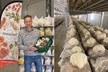
Year-round production, automation, and reliable varieties form the foundation of Dutch grower Teun Laan's cauliflower business. With cultivation sites in both the Netherlands and Spain, and his own sales organization, Laan aims to maintain a consistent supply and respond to shifts in the fresh produce market.
Year-round production through geographic spread
Laan cultivates cauliflower on about 550 hectares in Spain and an additional area in the Netherlands. This distribution allows him to supply retailers and wholesalers in the Netherlands, Germany, Belgium, and Portugal throughout the year. "We start in Spain around November and continue until June. In the Netherlands, we begin again in April. This ensures continuity in the supply chain," Laan said.
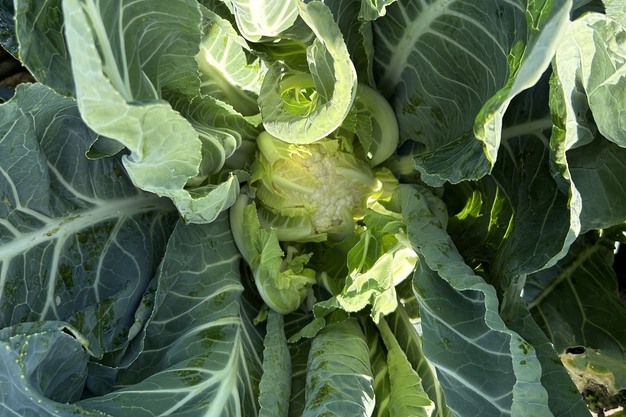 © Enza Zaden
Labor shortages drive automation
Labor availability remains one of the biggest challenges for his business. "Every year, it's a challenge to keep people motivated," he said. To reduce dependence on manual work, Laan invests in automation, from autonomous tractors and hoeing systems to future harvesting robots for broccoli. "We need to take steps now. Otherwise, we'll be too late."
Choosing adaptable and uniform varieties
For Laan, the key traits in lettuce varieties are health, uniformity, and ease of harvesting. "A variety must stay fresh, even five days after harvest. And it must be easy to plan," he says. Two varieties from Enza Zaden, Oceanique and Twistique, meet these criteria well. "Oceanique has strong self-covering ability and produces a heavy, attractive head. Twistique is robust, uniform, and easy to harvest thanks to its sturdy plant structure, especially noticeable in Spain."
Adapting to climate variability
Unpredictable weather patterns are reshaping production. "In the past, frost could occur as early as October, but that's less certain now. However, extreme rain or heat is more common," Laan explained. He therefore focuses on varieties that can tolerate stress and maintain quality under fluctuating conditions.
Collaboration with seed companies
Laan also emphasizes the importance of cooperation with seed developers. "We need good varieties for stable operations. The market is changing rapidly, and with AI and automation, new demands are emerging. You need to be able to adapt quickly," he said. Close communication between growers and seed companies, he noted, helps align breeding programs with practical needs.
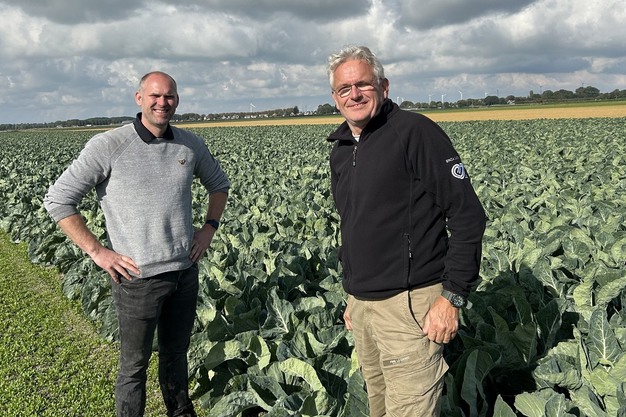 © Enza Zaden
Market and sustainability outlook
Market conditions remain volatile, with smaller cauliflower sizes gaining popularity in the organic segment, while larger heads continue to dominate conventional markets. At the same time, consumer demand for year-round availability is increasing, requiring better coordination between growing regions.
Sustainability is another growing focus. "The range of crop protection products is shrinking fast. We need green alternatives, but also varieties with strong adaptability in the field," Laan said. He expects future breeding efforts to include resistances that support more resilient production systems.
Laan's approach reflects a broader shift in European vegetable production, one that balances automation, adaptability, and collaboration to ensure a consistent supply under changing environmental and market conditions.
 © Enza ZadenFor more information:
Fokke Hoeksma
Enza Zaden
Tel: +31 (0) 228-350100
Email: [email protected]
www.enzazaden.com
Teun Laan
Laan Vegetables
Email: [email protected]