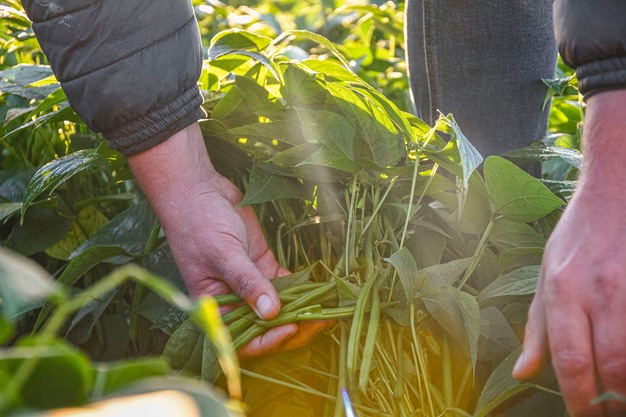
In early September, Fresh2You was in the midst of the Dutch green bean season. According to commercial manager Willem Vogelaar, supply and demand were in balance and sales were good. That is because the company deliberately cultivates 'to plan' rather than speculation. Before, the industry easily absorbed surpluses. These days, though, that is no longer a given. "Industry companies have better control over their supply. So, it's wiser to grow in a targeted manner," he says.
 © Fresh2You
In recent years, insufficient sales have meant hundreds of hectares of green beans were plowed under. Fresh2You, however, still managed to sell its beans. Nowadays, cultivation is more cautious: to avoid excesses, less is sown. In the winter, Fresh2You uses sales forecasts to draw up a sowing plan with only a 5% margin to accommodate fluctuations. "We're not afraid of shortages. We'd rather have that than too much." This year, yields per hectare were above average, allowing the company to serve all its regular customers.
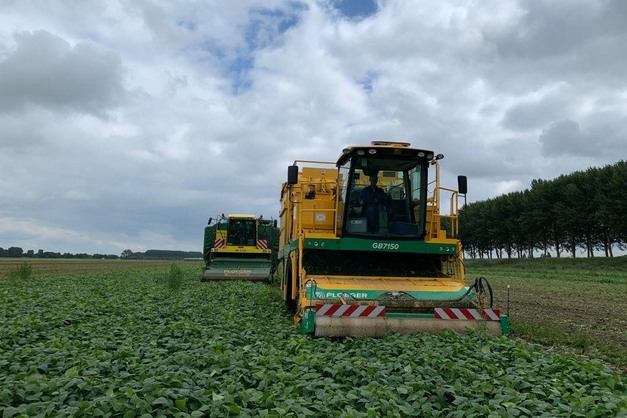
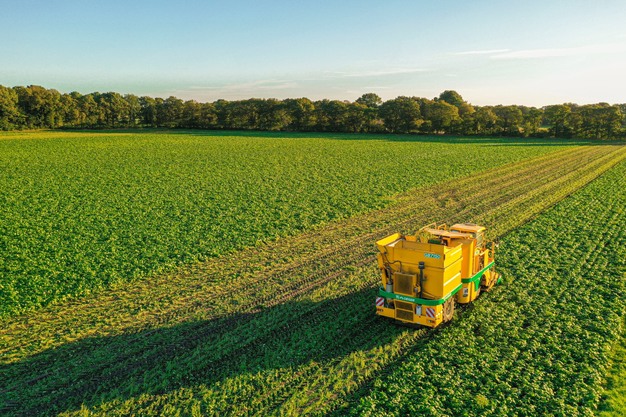
Fresh2You harvested its green beans mechanically, so some are unmarketable and, thus, used for animal fodder. The end product contains three to eight percent broken beans. Those turn brown more quickly, so the company keeps the chain as short as possible: what is picked today is delivered to clients tomorrow or, at the latest, the following day.
 © Fresh2You
Still, cultivation remains challenging. "People want perfect beans, but the range of resources available is becoming increasingly limited," says Vogelaar. Despite those limitations, Fresh2You manages to deliver a uniform product within the applicable rules.
Demand is stable, but consumption is declining slightly, a trend seen in other vegetables too. "Consumers increasingly opt for convenience. Ready-to-eat vegetables are becoming more popular, while traditional ones are under pressure." Also, younger people are more likely to choose meal kits or salads.
The key to growth, explains Willem, lies with convenience and positioning. Along with ready-to-cook beans, he sees a future in 'laid beans': beans that lie neatly in one direction so people can cut the ends off in one go. This form of ease of use is already the norm in the United Kingdom and could catch on in the Netherlands.
 © Fresh2You
Willem considers the air fryer trend as a second growth opportunity. In the US, the rise of the air fryer has boosted bean consumption by as much as 30% per year. This convenience could also appeal to Dutch consumers.
He adds that this aligns with the health trend where legumes play a prominent role. "People want to live and eat healthier, and green beans fit perfectly into that. It's now up to us to position the product smartly and make it as easy as possible for consumers," Willem concludes.
 For more information
Fresh2You
Tel.: +31 (0)6 5325 2597
[email protected]
www.fresh2you.nl