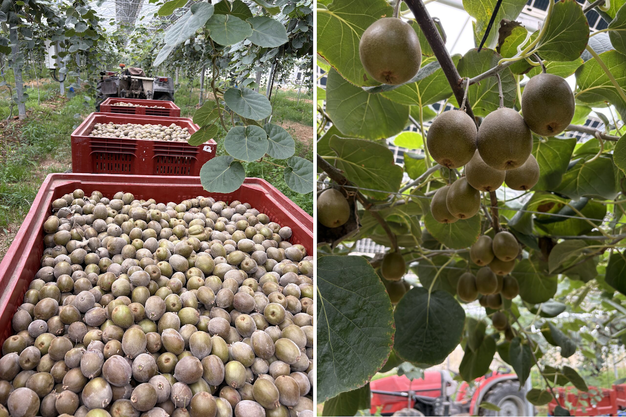
Based in the Drôme region, Anthony Oboussier has just completed his very first crop of red kiwis. The harvest was promising but also full of lessons to be learned. The fruit tasted good, but the size fell short of expectations.
 © EARL Les Chambres
Encouraging start for the new crop
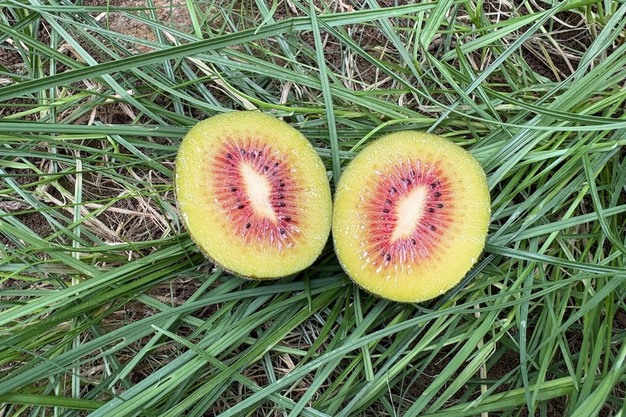
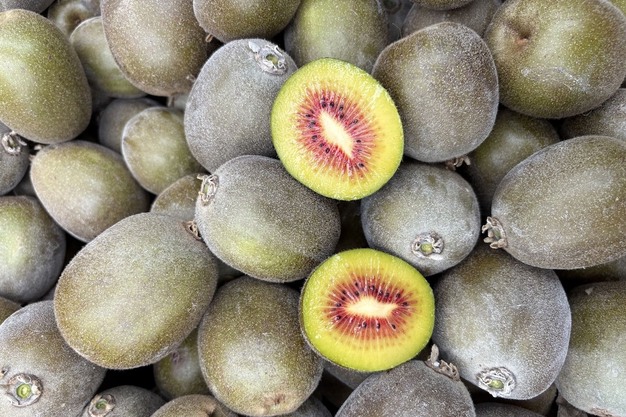
Having just recently started growing kiwis, Anthony Oboussier harvested his first yellow kiwis in mid-September. "It was a small harvest, but nothing unusual for a first year," according to him. A few weeks later, on October 10th, the harvest of red kiwis began. "We obtained 1.4 tons per hectare. It is an encouraging start, because the taste quality is really good, with a high sugar content and good internal coloring."
 © EARL Les Chambres
A size problem linked to pollination
While the taste quality of the fruit has been praised, there is still room for improvement in terms of size. "We found that 60% of the fruit was under 65 grams, which is the marketing limit. This means that we cannot make the most of a large part of the harvest," explains Anthony Oboussier. These smaller sizes are the result of insufficient pollination. "The male plants were not sufficiently developed, so there were few flowers to ensure effective natural pollination. To make up for this, we used assisted pollination by spraying pollen in the orchards, but obviously, this was not enough. On the small fruits, we can see that seeds are missing from the inside, a sign of incomplete pollination."
 © EARL Les Chambres
Adjustments are already being made for next year
In spite of this, the grower remains confident about the future. "Next year, the male plants will be much more developed, so natural pollination should be more effective. I also plan to accompany the crops with foliar fertilizers rich in trace elements to stimulate cell multiplication and thus improve fruit size."
This first year, therefore, has enabled the grower to identify the levers on which to act in order to make progress. "The red kiwi crop is full of potential, and with a few adjustments, the results should live up to our expectations."
For more information:
Anthony Oboussier
EARL Les Chambres
Phone: +33(0)6 75 85 59 51
[email protected]