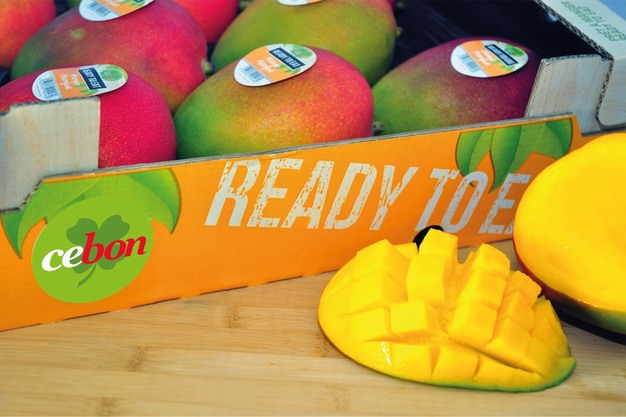
With the expected arrival of larger Brazilian volumes and rising demand after the summer period, the mango market appeared to be on the upswing. However, strikes at the ports of Antwerp and Rotterdam threw a spanner in the works last week. "It remains to be seen how the new mango shipments will come off the boats. It could still put pressure on the market," says Ive Lambert of ADW Fresh Trade.
 © ADW Fresh Trade
"In recent days, dozens of containers were waiting at the port," he continues. Although both companies were already operating under the Group A. De Witte banner, Starfruit (where Ive previously worked) and Central Fruit have officially continued as ADW Fresh Trade since 1 October. "The strike may have ended, but there's still plenty of stress and delay. The backlog won't clear overnight, it takes days. Meanwhile, new ships keep arriving, so it keeps piling up. There were already delays; for example, one of the vessels had been transshipped to another, which meant a delay of seven to eight days. Now that has increased to almost fifteen days. That's challenging, especially for perishable products like fruit."
"It's creating limited volumes for mangoes," Ive explains. "At the moment, prices aren't skyrocketing because of the delays. You see prices between €6 and €7.50, with some outliers up to €8 for top quality. So prices have risen slightly, but soon there will be downward pressure on the market. There's still a lot of fruit on the boats, but the question is: what condition will it be in when it arrives? If the quality is only mediocre, you have to sell it quickly or offload it at dumping prices, and that can affect the entire market. Too much dumping drags everything down, even in the longer term."
Supply gap between Brazilian and Peruvian seasons
All this comes just as the mango market seemed to be picking up again. "August and September are traditionally quieter months for mangoes. Another factor in recent years is that a lot of Israeli mangoes enter the market during this period, which many customers avoid. Then it's very quiet for a while, but since October things have started to improve. Now we rely on Spain, where the season is almost finished by then, and Brazil. At the moment, mainly Keitt is coming in, along with some Kent, Tommy, and Palmer. Volumes from Brazil are increasing, but we expect significantly larger quantities in two or three weeks."
 © Daan Sturm | FreshPlaza.com
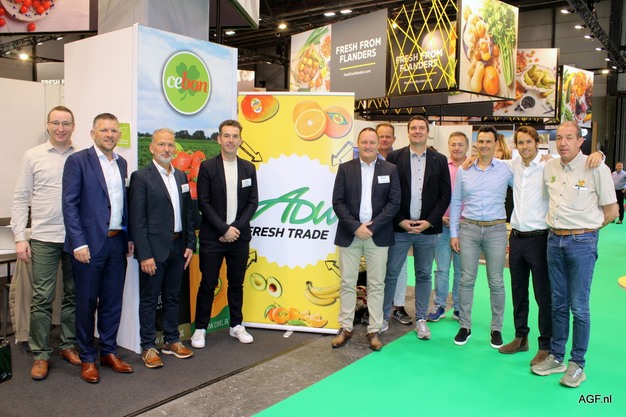
The Group A. De Witte team at the announcement of ADW Fresh Trade's logo at the last Fruit Attraction
By then, however, a new concern is already looming. "The Brazilian harvest seems to be ending earlier than usual. Normally, we have good volumes until the end of December, but this year it will probably end by late November. And Peru is actually later, they're talking about starting in week 48 or 49. That means a tight supply situation during the Christmas period. December could be tricky because it might create a gap in supply. Even with fast ships, there's little margin. That's why we're doing a lot of calculations and planning ahead now. December is an important month for exotics, and if you're short on mangoes, an essential product, it adds extra pressure."
Price fluctuations in passion fruit
According to Ive, things are no easier in the passion fruit market. "These months show that life in trade is anything but boring. But then again, if it were easy, anyone could do it," he says with a smile. "We're seeing big fluctuations in passion fruit. We actually expected a better supply from June and July. It did arrive for a while, even stronger than expected, but then it suddenly dropped sharply. Prices fell from €16–18 to a low of €7, but now they're rising again to €12–14, and it looks like they'll go up further."
"These fluctuations are significant, and what surprises me is that products keep selling despite high prices. You'd think there's a limit, and there is, but even with extremely expensive cauliflowers, for instance, they still sell. People are price-conscious on one hand, but with the right products, they seem willing to pay for quality."
For more information:
ADW Fresh Trade
Hoveniersstraat 13
2860 Sint-Katelijne-Waver, Belgium
Tel: +32 2 242 62 00
[email protected]
www.groupadw.be/adwfreshtrade