Sri Lanka continues to spend large sums on importing food that could be cultivated domestically, despite the country's agricultural potential. Official data show that food and beverage imports reached about US$1.93 billion in 2024, up from US$580 million in 2011, a more than threefold increase over 13 years.
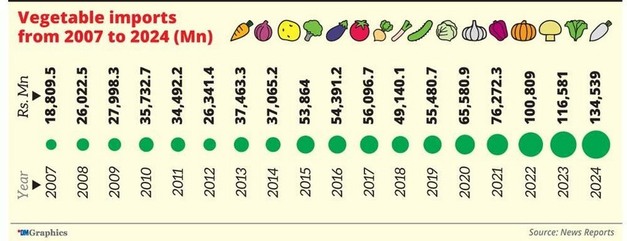
Vegetable imports rose sharply from around US$115 million in 2011 to US$593 million in 2024. These crops could be grown locally, given Sri Lanka's climate and soil conditions.
Overall, consumer goods imports reached about US$6.96 billion in 2024, compared to US$2.69 billion in 2011, reflecting ongoing dependence on imported products. From January to August 2025, Sri Lanka spent more than US$760 million on food and beverage imports alone. Of this total, around US$162 million went to vegetables.
 © News Reports
Economics professor Wasantha Athukorala from the University of Peradeniya said, "This growing import bill reflects structural weaknesses in domestic production, weak policy support for local farmers, and the absence of long-term strategies to boost agriculture and food processing industries."
He added that the continued importation of vegetables, all of which can be sourced locally, reflects deep-rooted policy failures and insufficient planning. "The issue is not that we lack the capacity to produce. It's that we have failed to create a sustainable system that supports local farmers, ensures market stability, and reduces dependence on imports," he explained.
Athukorala argued that instead of allocating funds to imports, the government should invest in strengthening agriculture, improving storage and distribution, and supporting farmers through subsidies and guaranteed prices. He said that such measures could reduce import bills, generate employment, and support food security.
Source: Daily Mirror